---------- Buy 3 Teething Rollers and receive Free Food Teether + Free Shipping - LIMITED TIME ONLY ---------- FREE SHIPPING ON ORDERS $99+

Amber Teething Collection

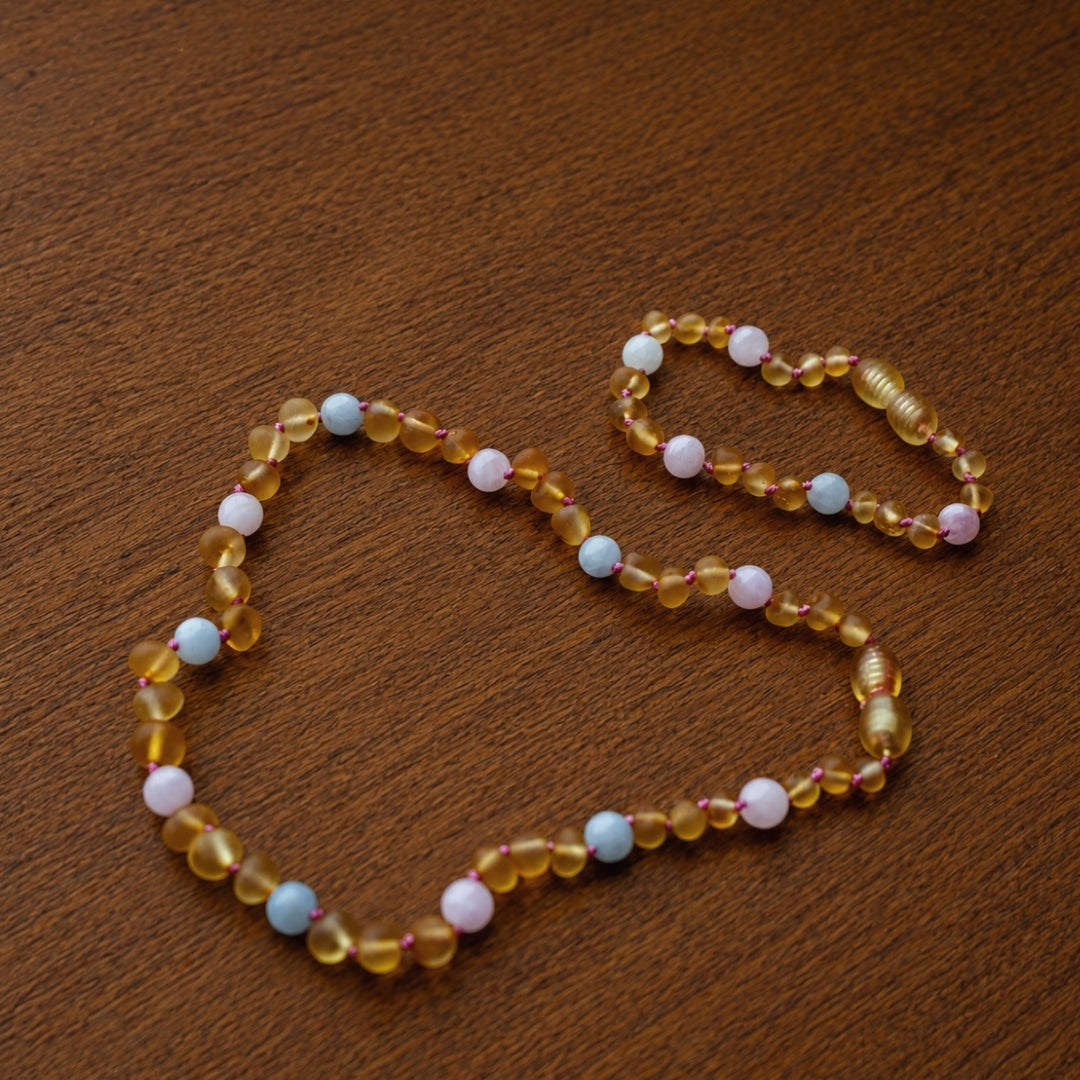
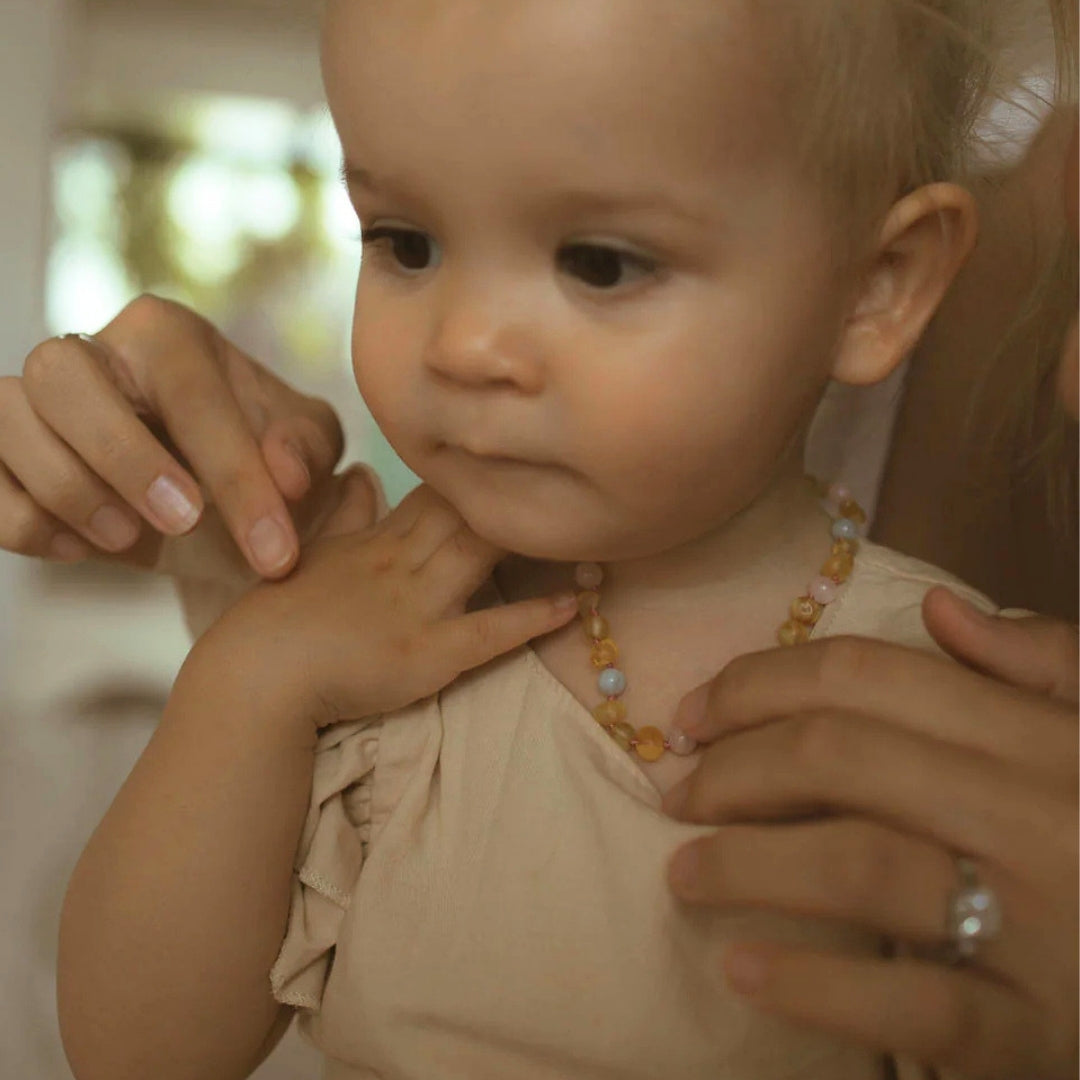
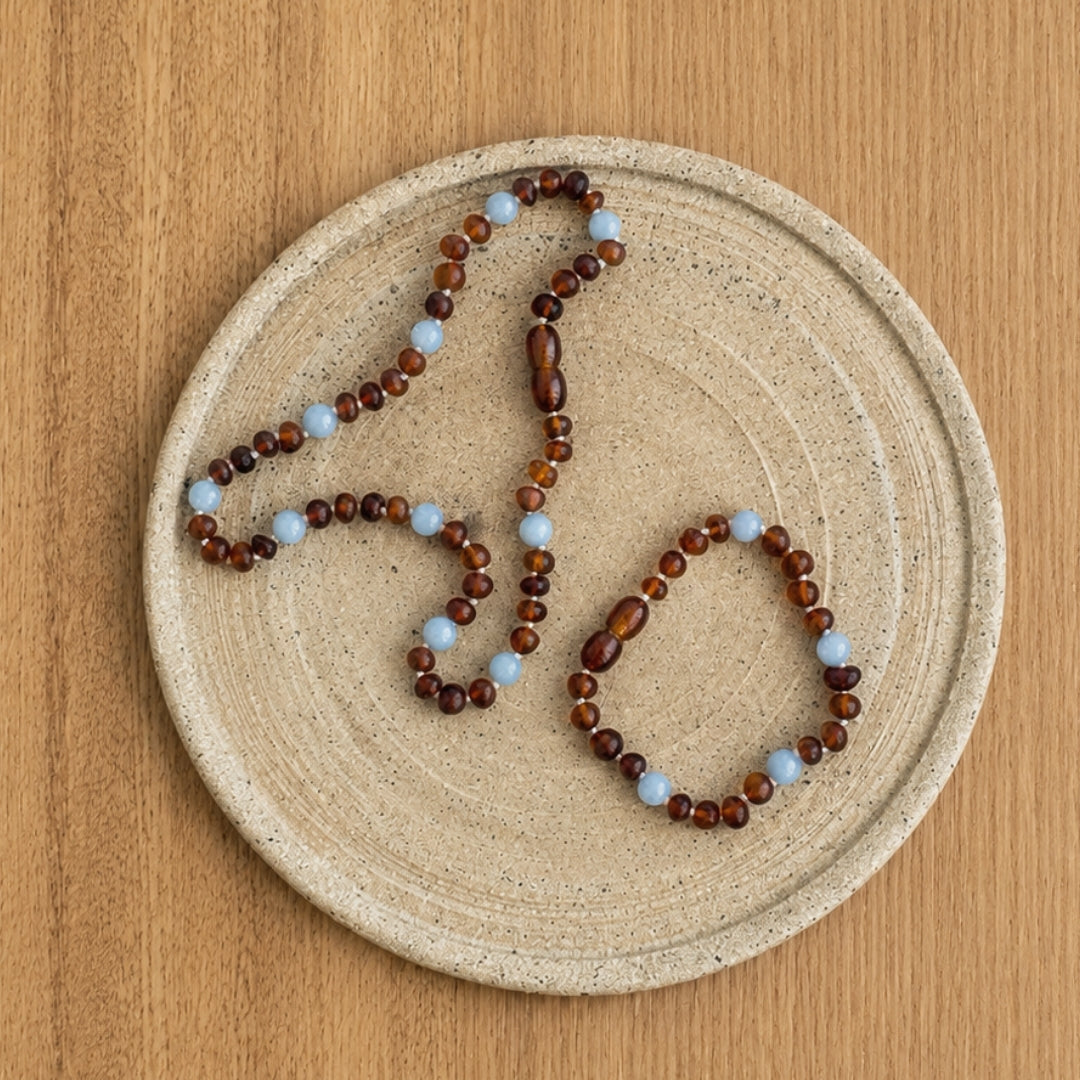
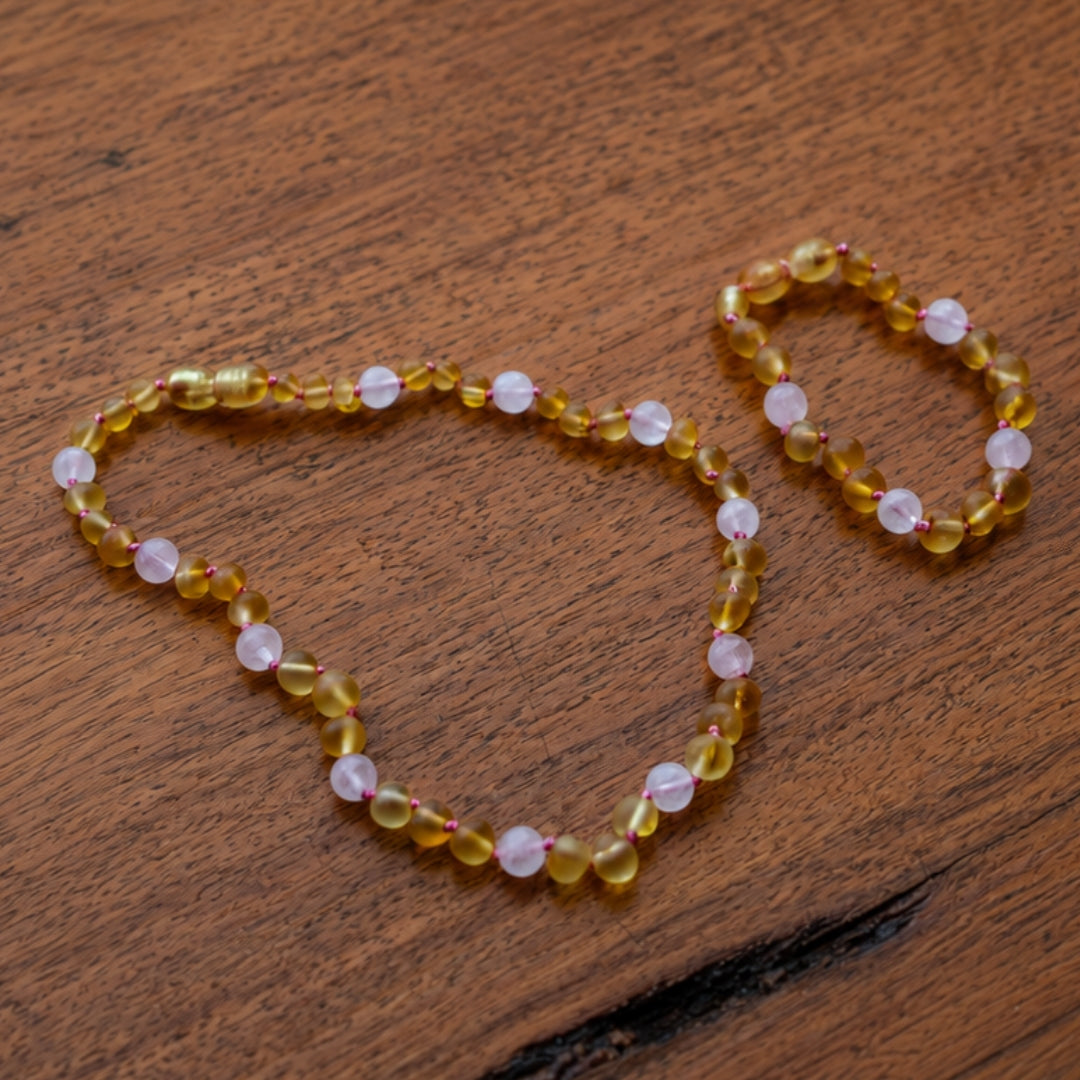
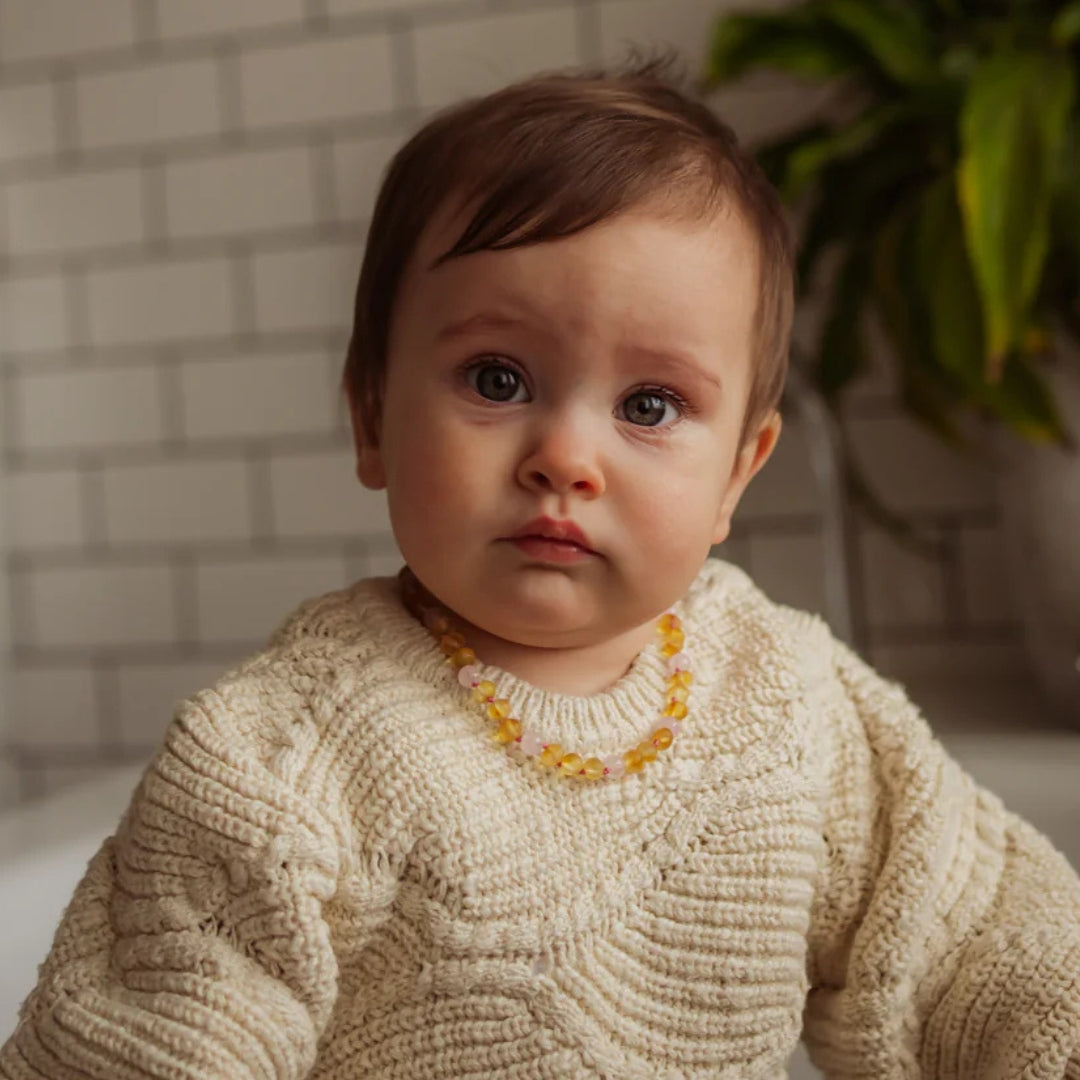
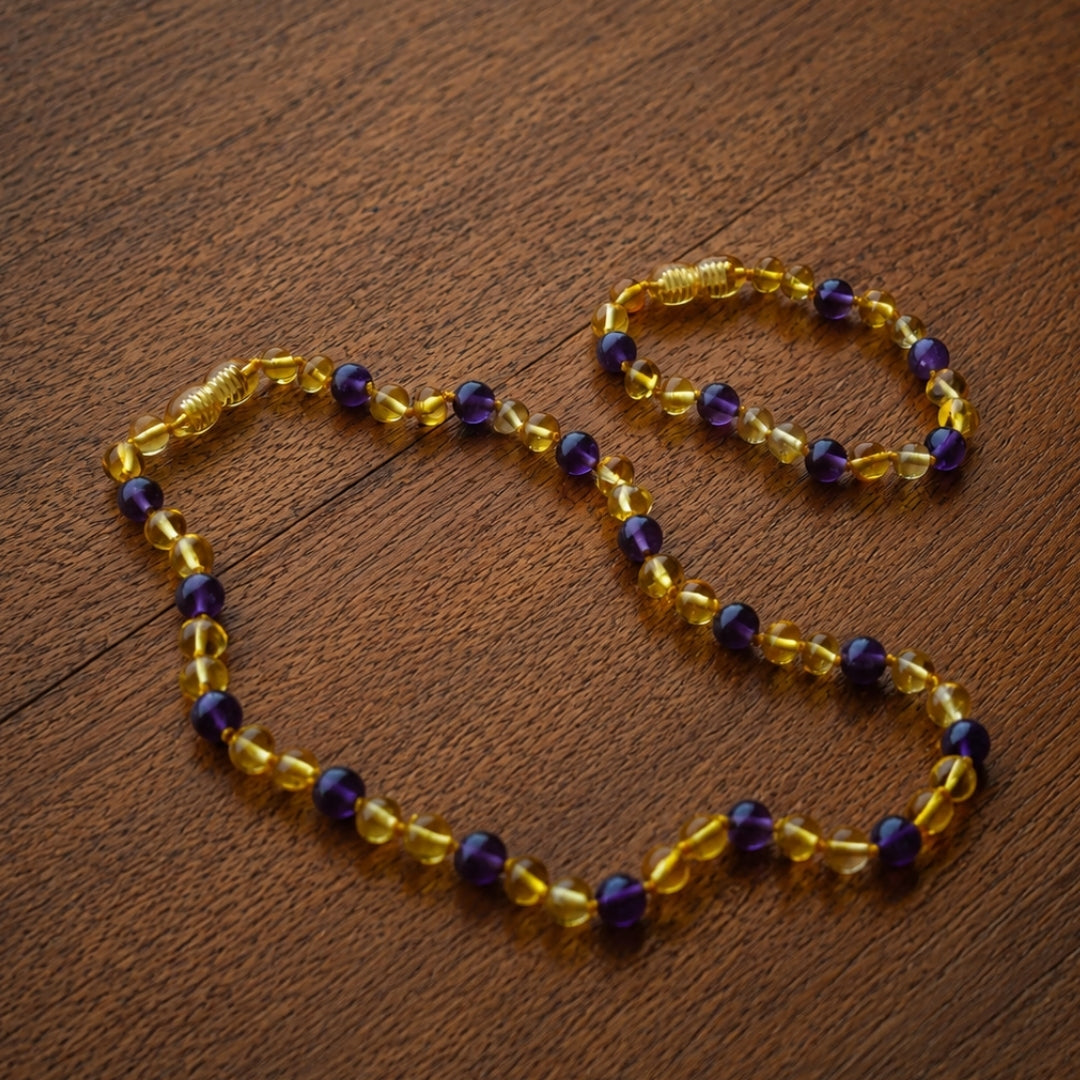
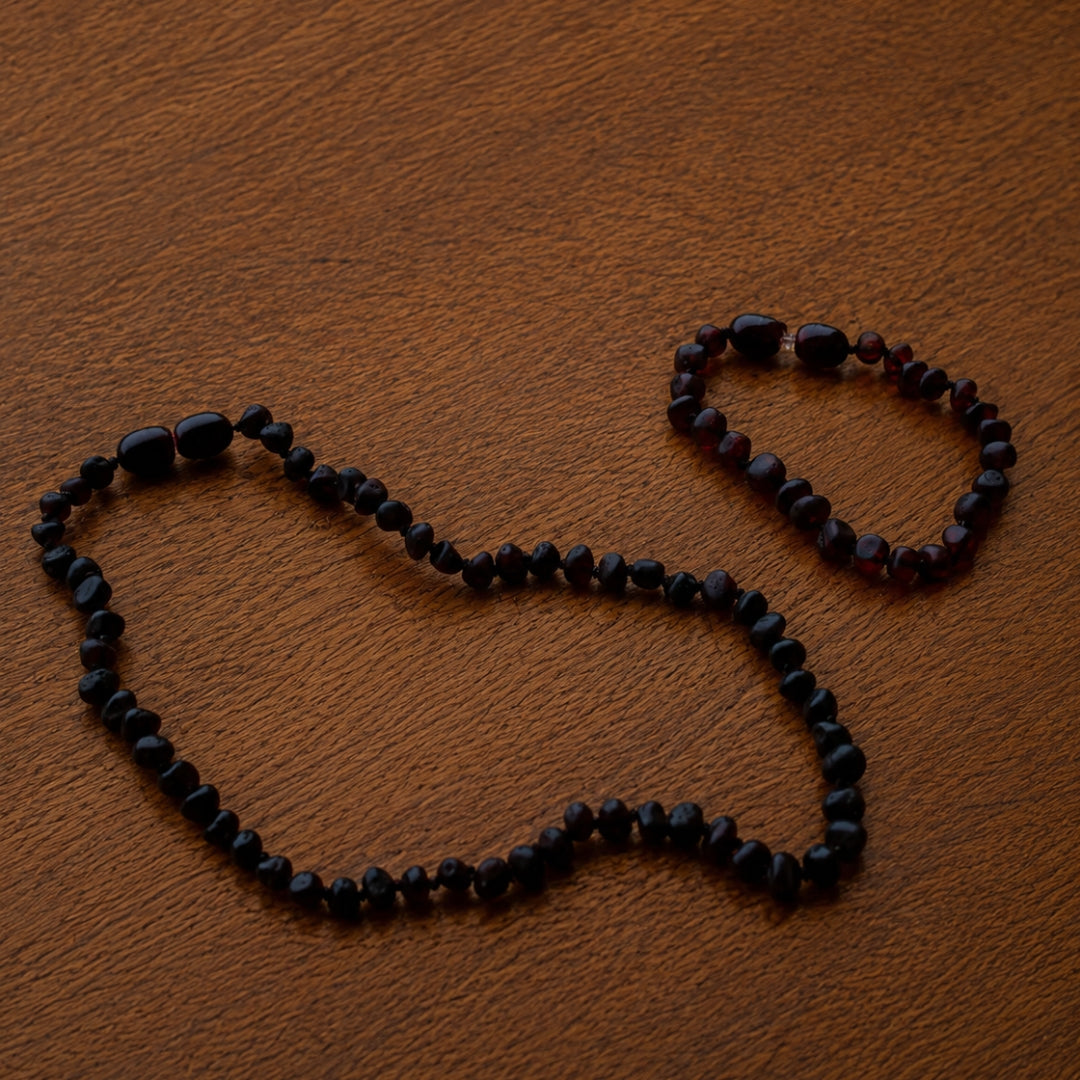
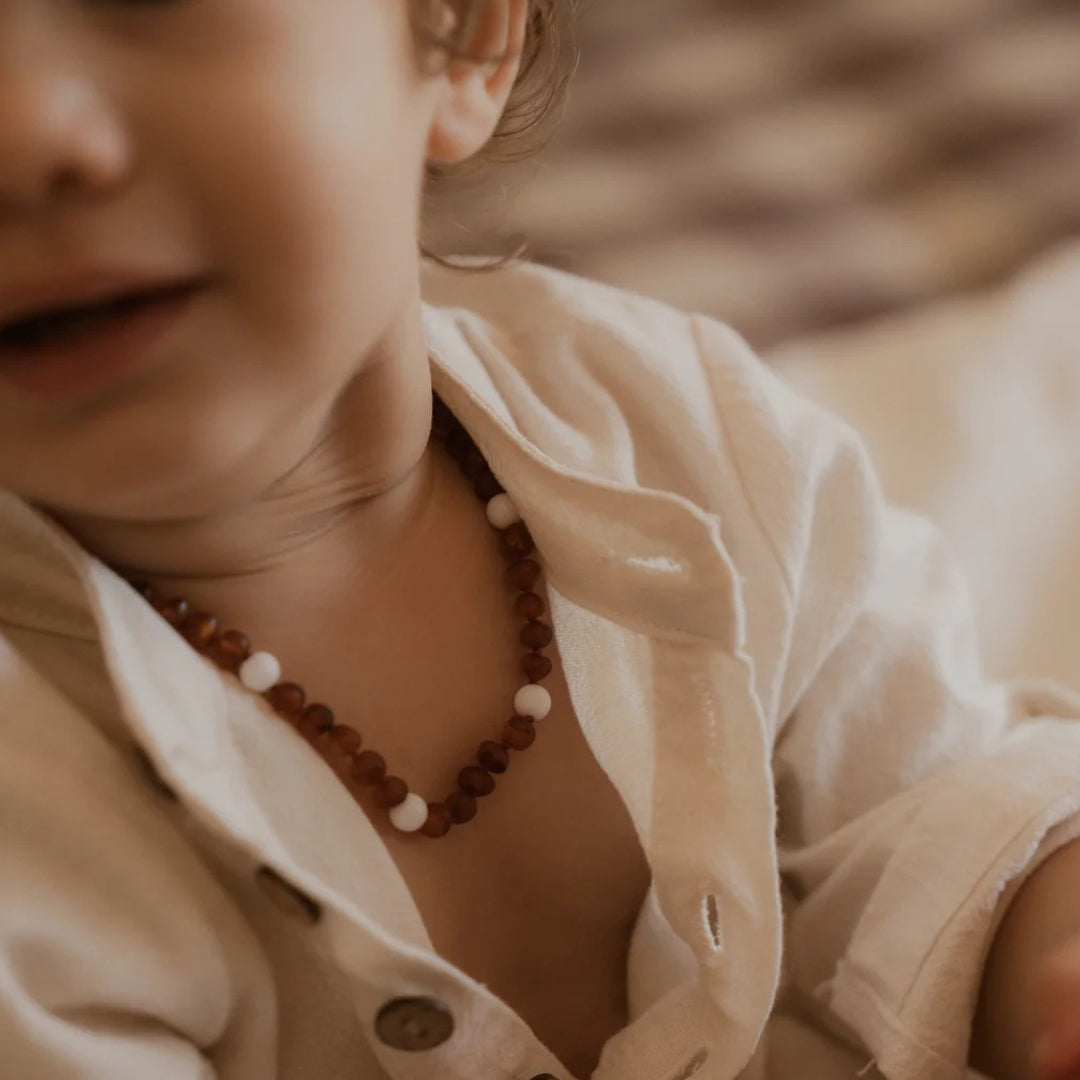
The Amber Teething Collection includes authentic Baltic amber necklaces, bracelets and anklets for babies and toddlers. Each piece uses individually knotted natural Baltic amber with a safety screw clasp designed to release under sustained pull pressure. Amber must be worn under direct adult supervision and removed for sleep, unsupervised play and feeding, in line with ACCC guidance for all children's jewellery.

How Baltic amber is believed to work

Baltic amber contains succinic acid, a naturally occurring organic compound. When amber is warmed by skin contact, it is believed to release trace amounts of succinic acid that are absorbed transdermally. Succinic acid has documented anti-inflammatory properties in laboratory contexts. Whether the trace amounts released by skin-warmed amber are clinically significant remains contested in mainstream paediatric literature, though community experience across hundreds of thousands of families consistently reports beneficial effects on teething discomfort.

Distinguishing authentic Baltic amber

Authentic Baltic amber is the only amber containing succinic acid in significant concentrations. It is warm to the touch within seconds (a thermal property unique to fossilised resin), lighter than glass of the same size, slightly soft to a fingernail test, and releases a faint pine-resin scent when warmed. Imitation amber is often phenol-formaldehyde resin sold as 'amber-look' and lacks these properties. We source exclusively from established Baltic-state suppliers with chemical authenticity testing.

The amber market has substantial counterfeiting at retail level. Plastic beads moulded to resemble amber are sometimes sold as authentic Baltic amber at prices that look too good to be real, and frequently are. The simplest authenticity test for buyers: real Baltic amber feels warm against the lip within five seconds and produces a faint pine-resin scent if rubbed quickly against fabric.

Safety design and supervision requirements

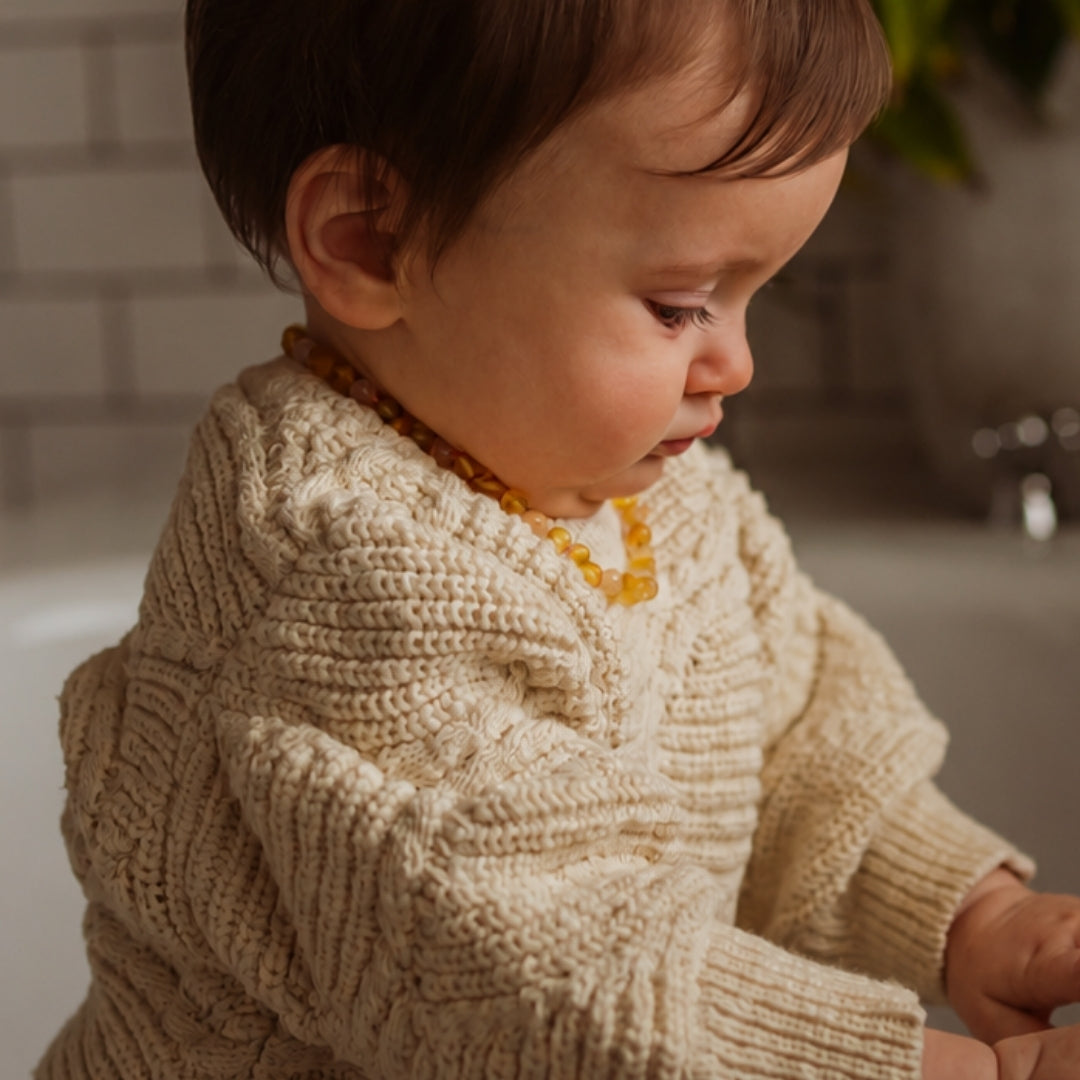
Our amber jewellery is designed with three safety features: individually knotted beads (so if the strand breaks, only one bead can detach), screw clasps designed to release under sustained pull pressure (reducing strangulation risk), and conservative length sizing (so the clasp cannot reach the mouth). Despite these features, ACCC supervision guidance applies to all children's jewellery in Australia: amber must be worn under direct adult supervision and removed for sleep, unsupervised play and feeding.

We are direct about supervision requirements because amber teething necklaces have been associated with serious incidents internationally when worn during sleep or unsupervised. The safety features in our design reduce risk significantly but do not eliminate it. Many families in our community choose to wear amber as an anklet under a sock rather than a necklace. This reduces visible supervision needs (because the anklet is not visible), maintains skin contact and reduces the choking and strangulation risk profile substantially.

Choosing the right piece

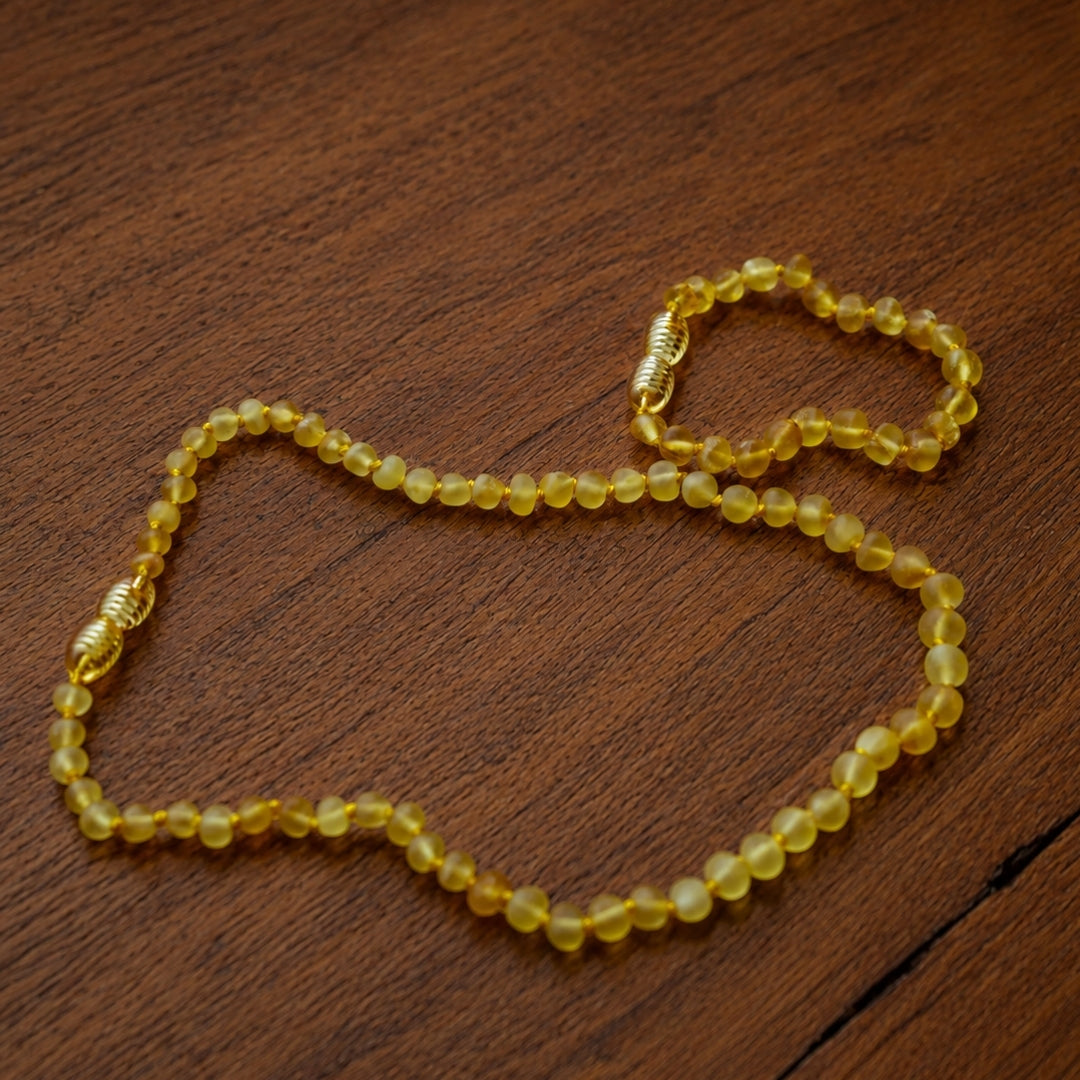
For newborns and young infants up to six months, anklets and bracelets are generally preferred over necklaces because they are easier to monitor and remove. For toddlers from six months upward, necklaces are practical for awake daytime wear under supervision. Bead colour and pattern are aesthetic rather than functional: all natural Baltic amber colours (cognac, honey, butterscotch, lemon, cherry, green) contain comparable succinic acid concentrations.

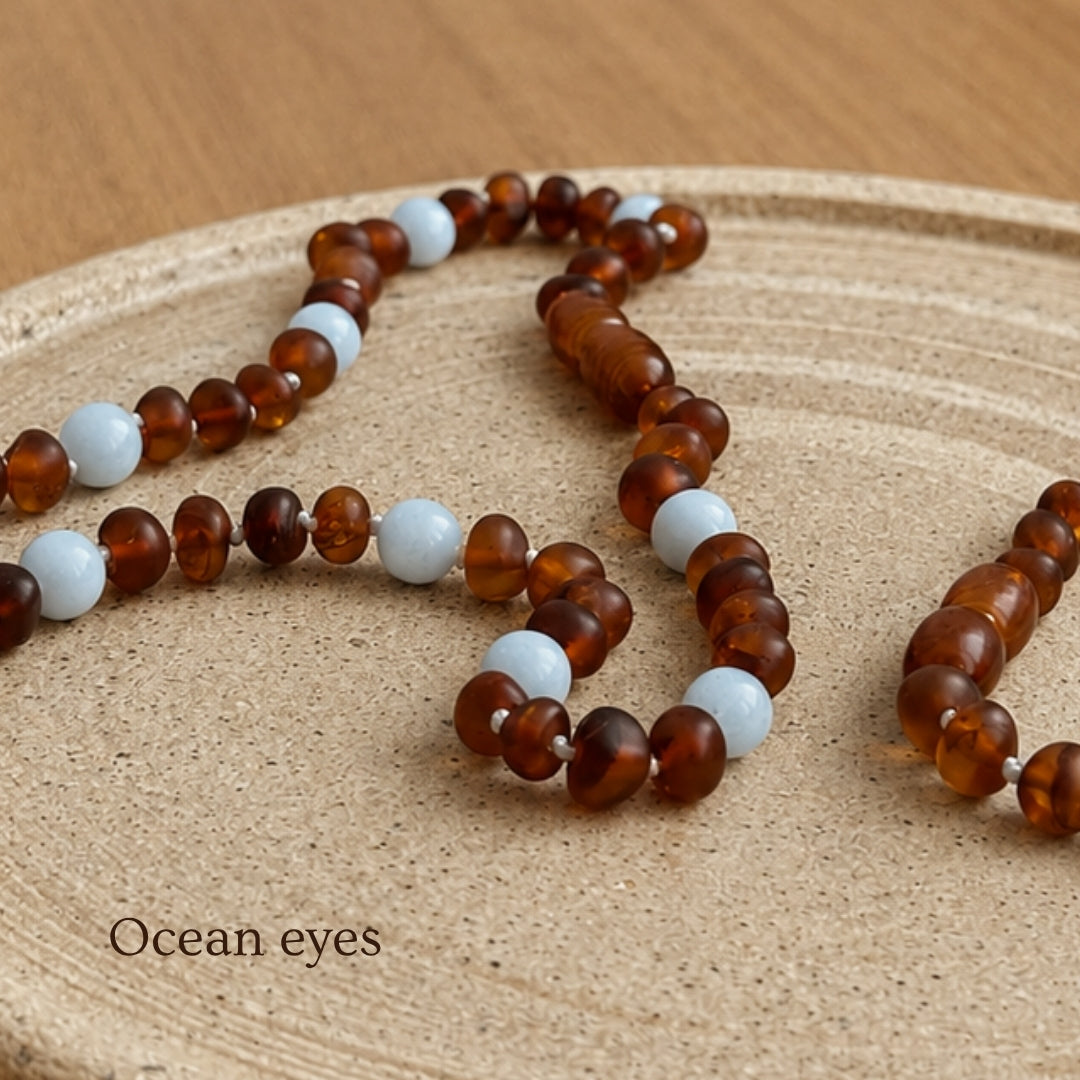
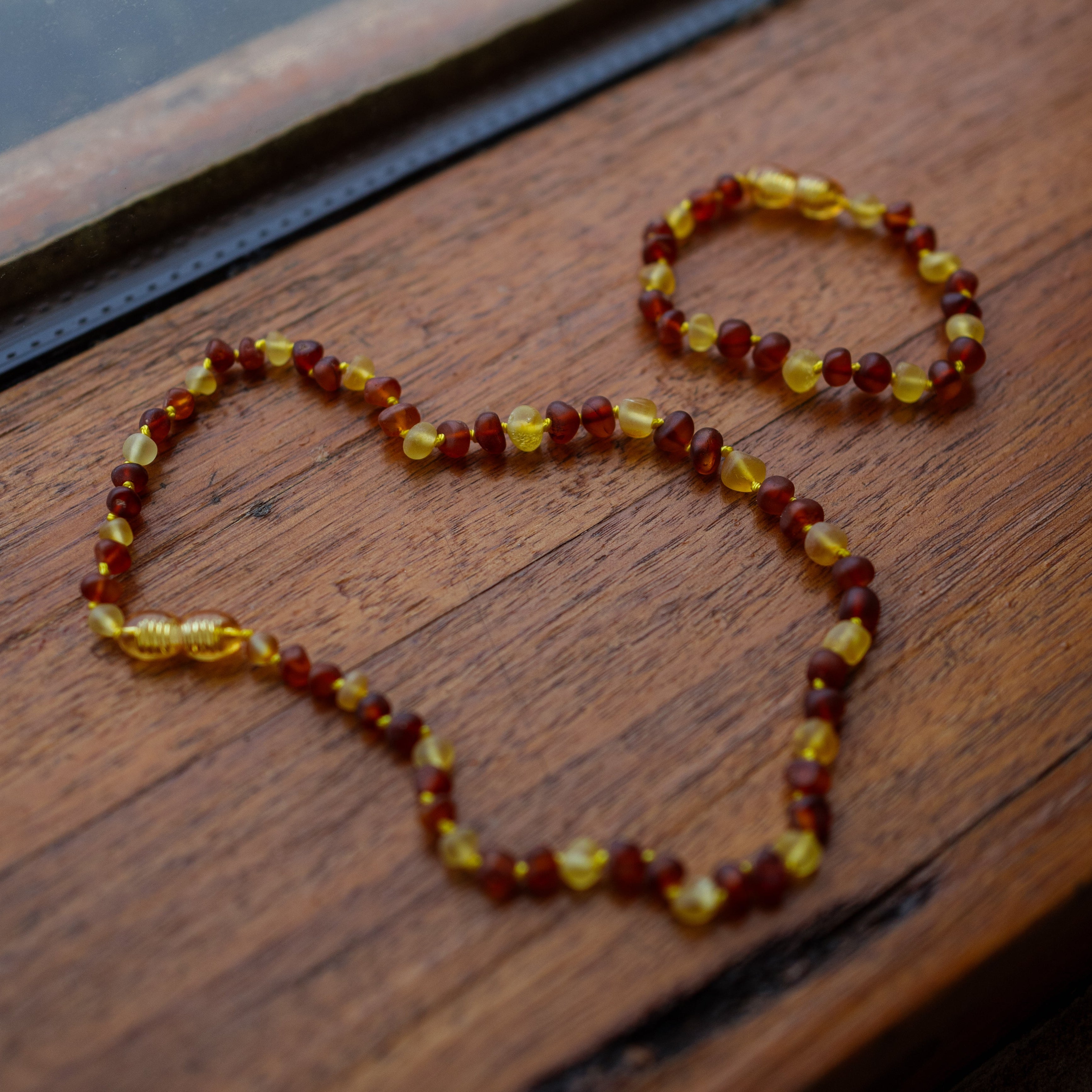
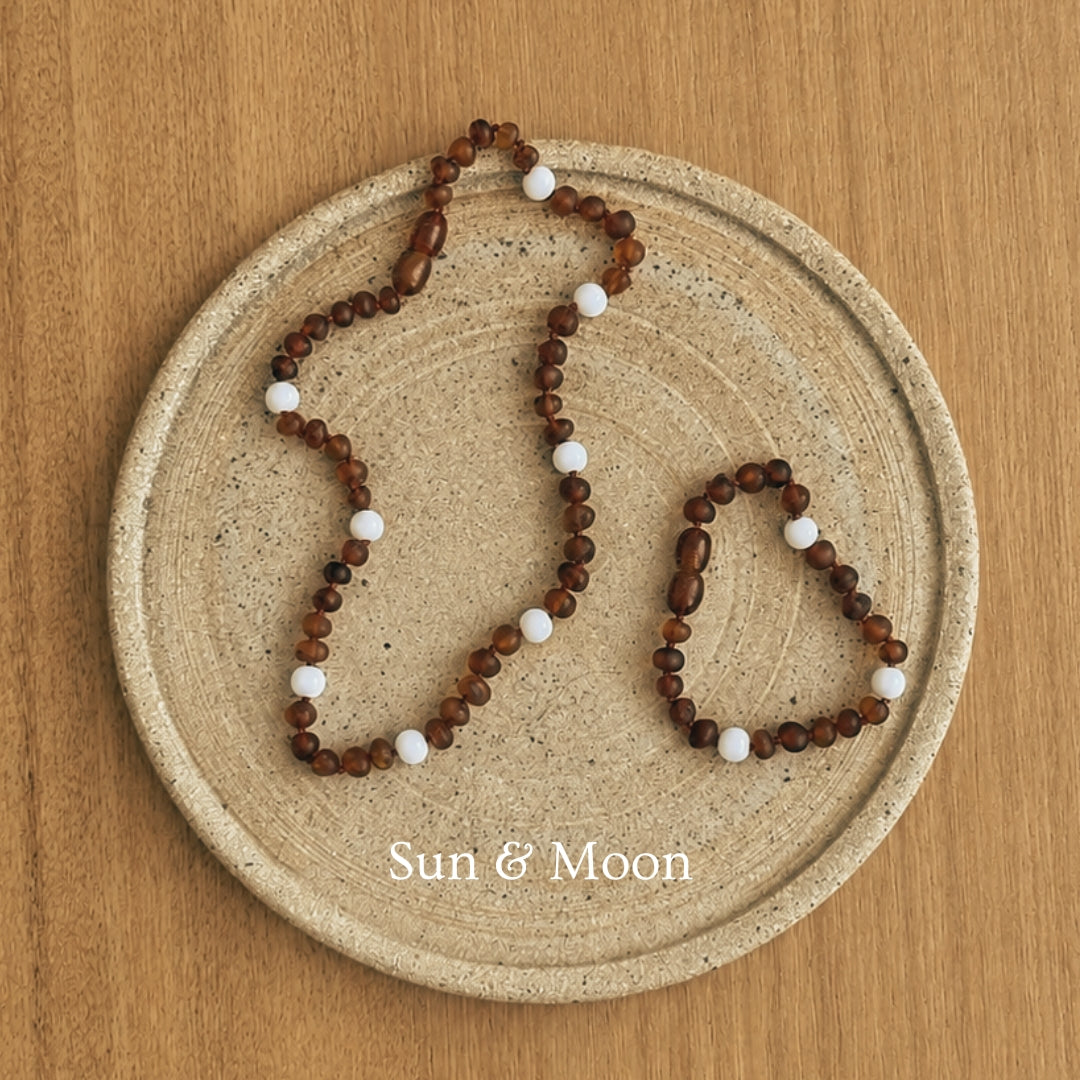
Our collection includes Pixie, Ocean Eyes, Honey Love, Honeycomb, Sun & Moon, Fruity, Cherry Red and My Sunshine, each available as necklace, bracelet or anklet, all priced from $23. Each piece is sized appropriately for child wear with the safety clasp positioned at the back where the child cannot reach it. Bracelets and anklets are also available as adult sizings under the Like Me collection for matching mother and child sets.

Frequently Asked Questions

Does Baltic amber actually help with teething?

Community evidence from hundreds of thousands of families consistently reports positive effects on teething discomfort when amber is worn against the skin. The proposed mechanism is succinic acid release from warmed amber, which has documented anti-inflammatory properties in laboratory studies. Mainstream paediatric literature remains skeptical due to limited clinical trial evidence. Our position is that amber is a reasonable supplementary option used under supervision, alongside more active relief like the Teething Roller during severe episodes.
Is it safe to leave amber on at night?

No. ACCC guidance is clear that all children's jewellery should be removed for sleep, unsupervised play and feeding. Amber necklaces have been associated with strangulation incidents when worn during sleep. Many families address this by using amber as an anklet under a sock, which maintains skin contact during sleep with reduced strangulation risk while still requiring removal for unsupervised periods. The simplest rule is: if no adult is directly supervising, the amber comes off.

How do I know my amber is real?

Real Baltic amber is warm to the touch within five seconds (a thermal property unique to fossilised resin), lighter than glass of the same size, slightly soft to a fingernail test (it will scratch lightly), and releases a faint pine-resin scent when rubbed quickly against fabric. Imitation amber (often phenol-formaldehyde resin) is cool to the touch, heavier, harder, and odourless. We source from authenticity-tested Baltic suppliers and can provide documentation on request.

What is the difference between cognac, honey and butterscotch amber?

All three are natural variations of Baltic amber with comparable succinic acid content. Cognac is the darkest, with deep brown-orange tones. Honey is the most common, with warm orange-yellow tones. Butterscotch is the lightest and most opaque, with creamy yellow tones. The differences are purely aesthetic; functional properties are equivalent across colours. Lemon, cherry and green amber are less common variations with similar succinic acid content.

Should I choose a necklace, bracelet or anklet?

Anklets worn under a sock are the most practical option for babies under twelve months, reducing supervision requirements while maintaining skin contact. Bracelets are well-suited to babies six months and older for daytime wear. Necklaces are best for toddlers from twelve months upward during supervised waking hours. The functional effect is similar regardless of which jewellery format you choose, since amber works through skin contact and warmth.

How long does amber jewellery last?

Baltic amber is a durable natural material and the jewellery can last decades with reasonable care. The functional teething benefit (succinic acid release) does not degrade over time. The cord and clasp components wear faster: most families replace cords every two to three years if a piece is worn daily. Many parents pass amber pieces between siblings or keep them as keepsakes after the teething years.

Can older children wear amber?

Yes. Many families continue using amber jewellery into early childhood for general wellness or simply as a meaningful natural piece. Some adult Like Me sets are designed to be matched with a child's amber piece. There is no upper age limit; the same supervision principles apply more loosely as the child grows older and the strangulation risk profile diminishes.

How do I care for amber jewellery?

Wipe amber gently with a soft dry cloth to remove skin residue. Avoid water, soap, alcohol, ultrasonic cleaners and prolonged sunlight exposure, all of which can damage the amber surface. Store in the original gift box or a soft pouch. Check the cord and clasp every few weeks for wear, and discard or restring if you see fraying. Replacing a worn cord is straightforward and we offer a restringing service at cost.

×