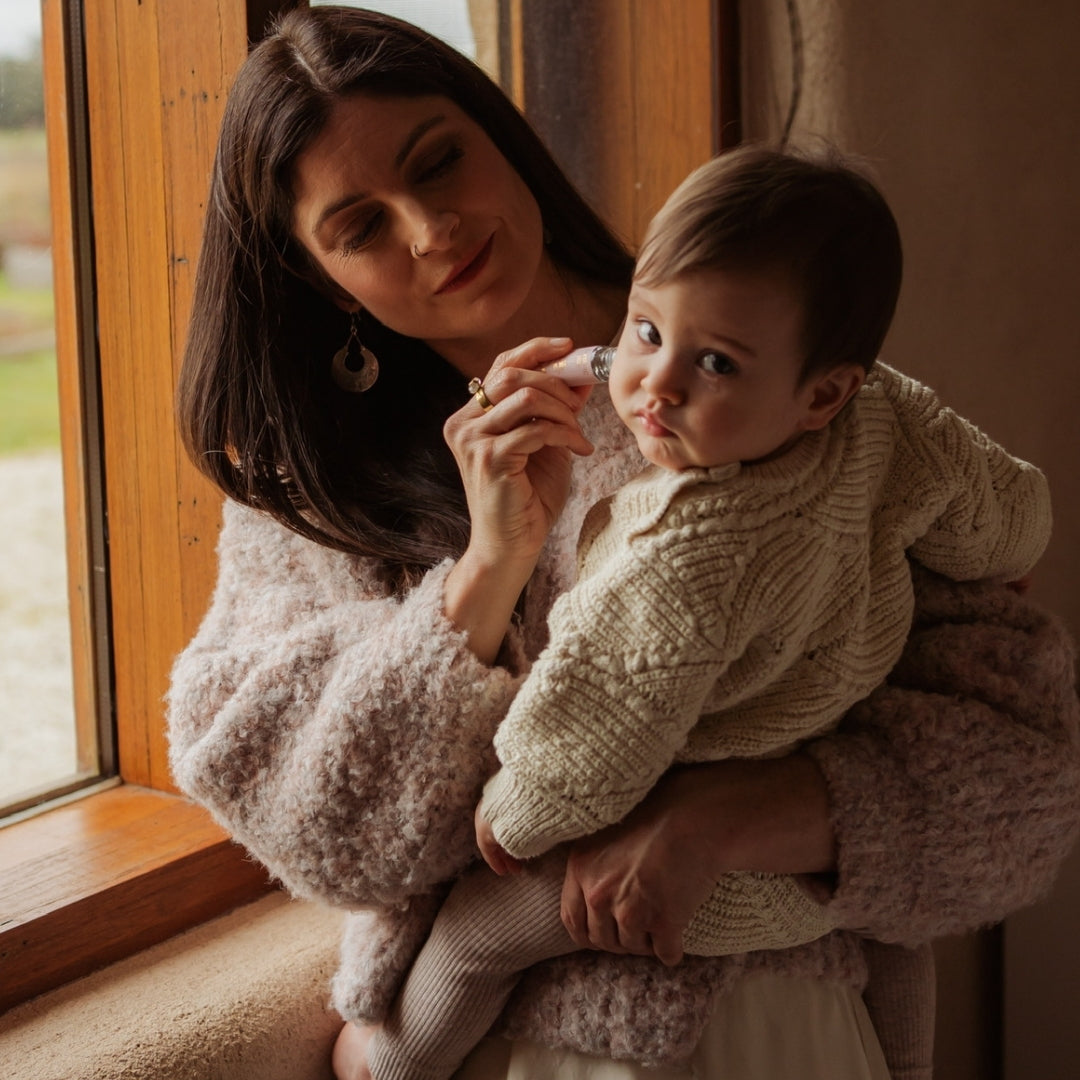
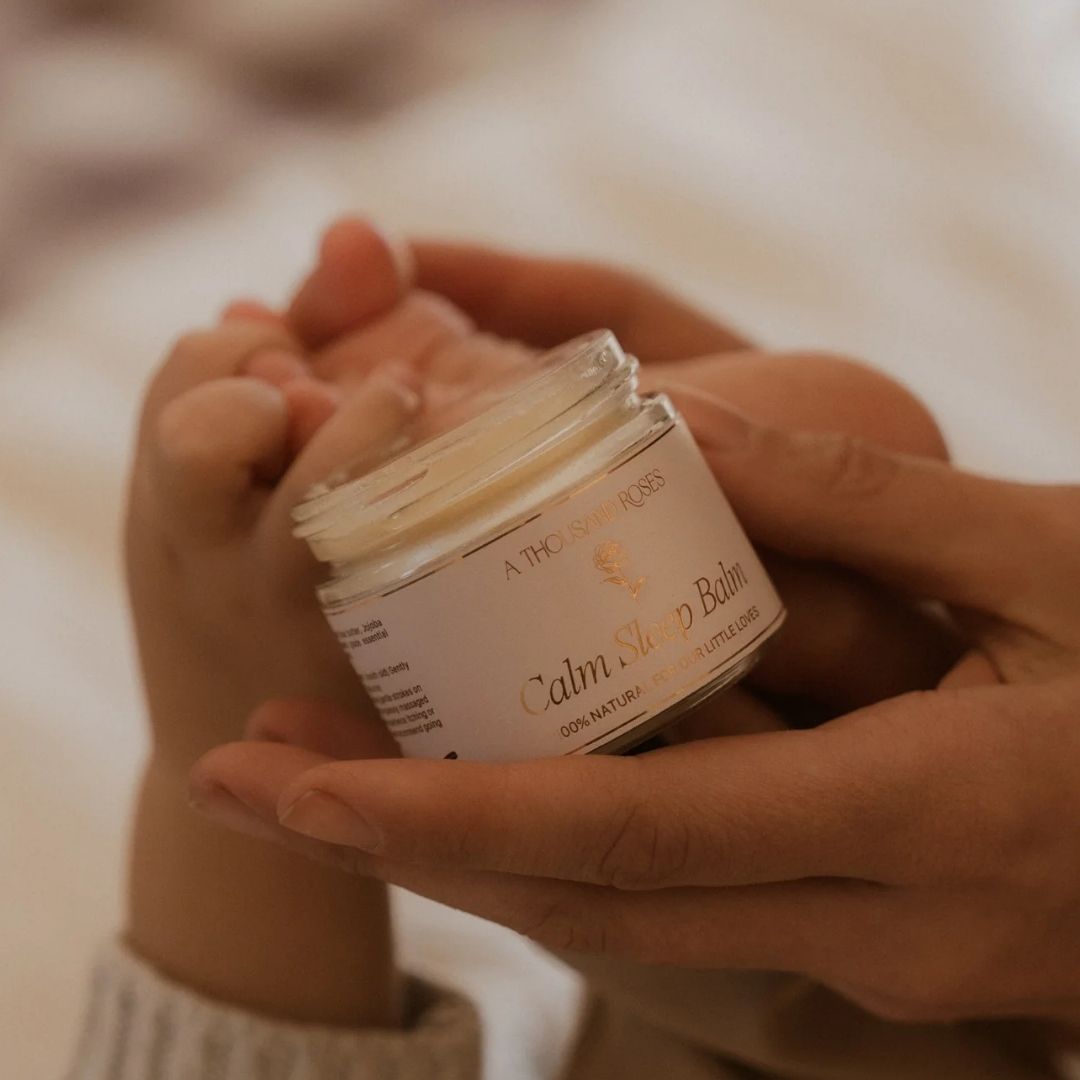
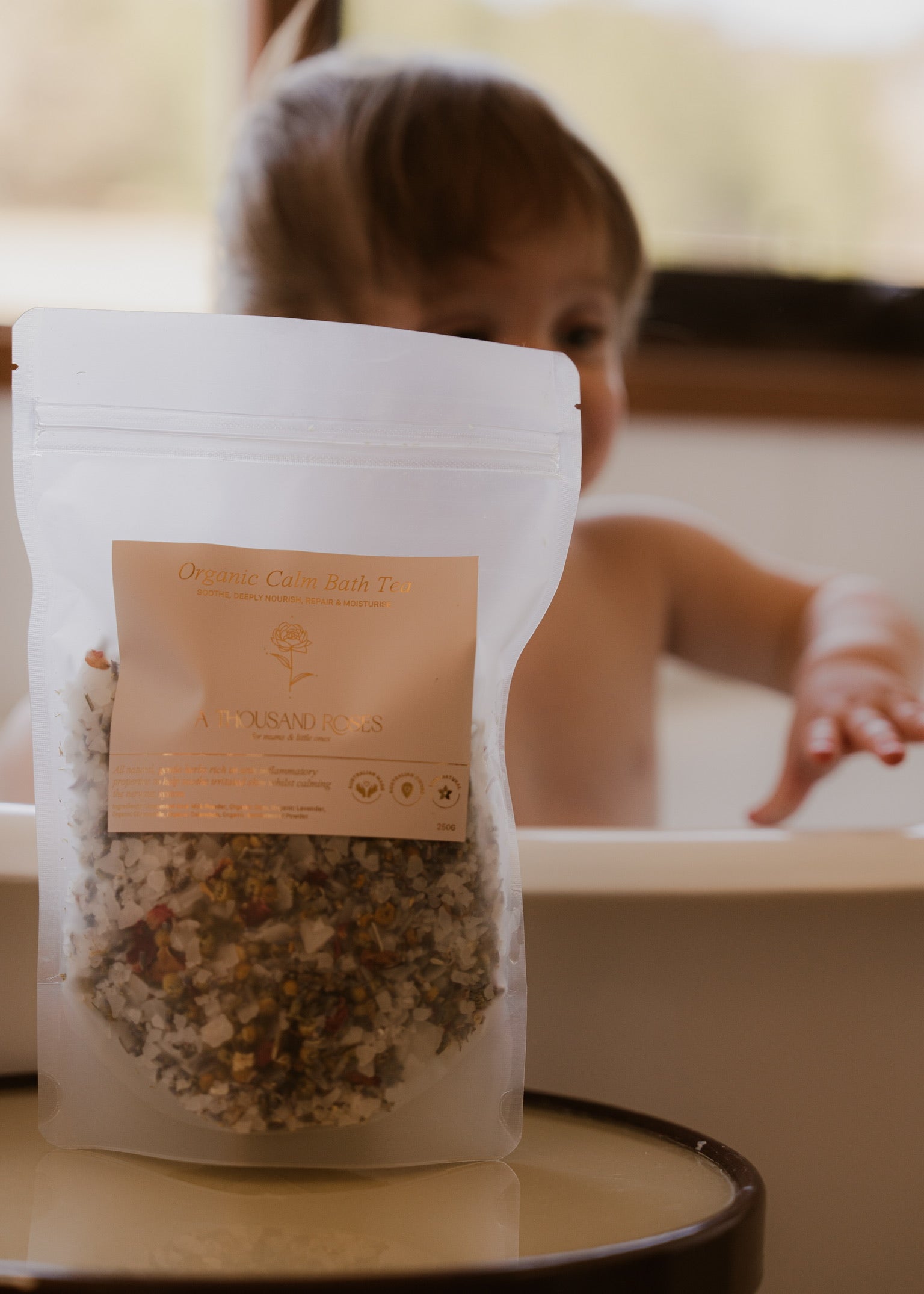
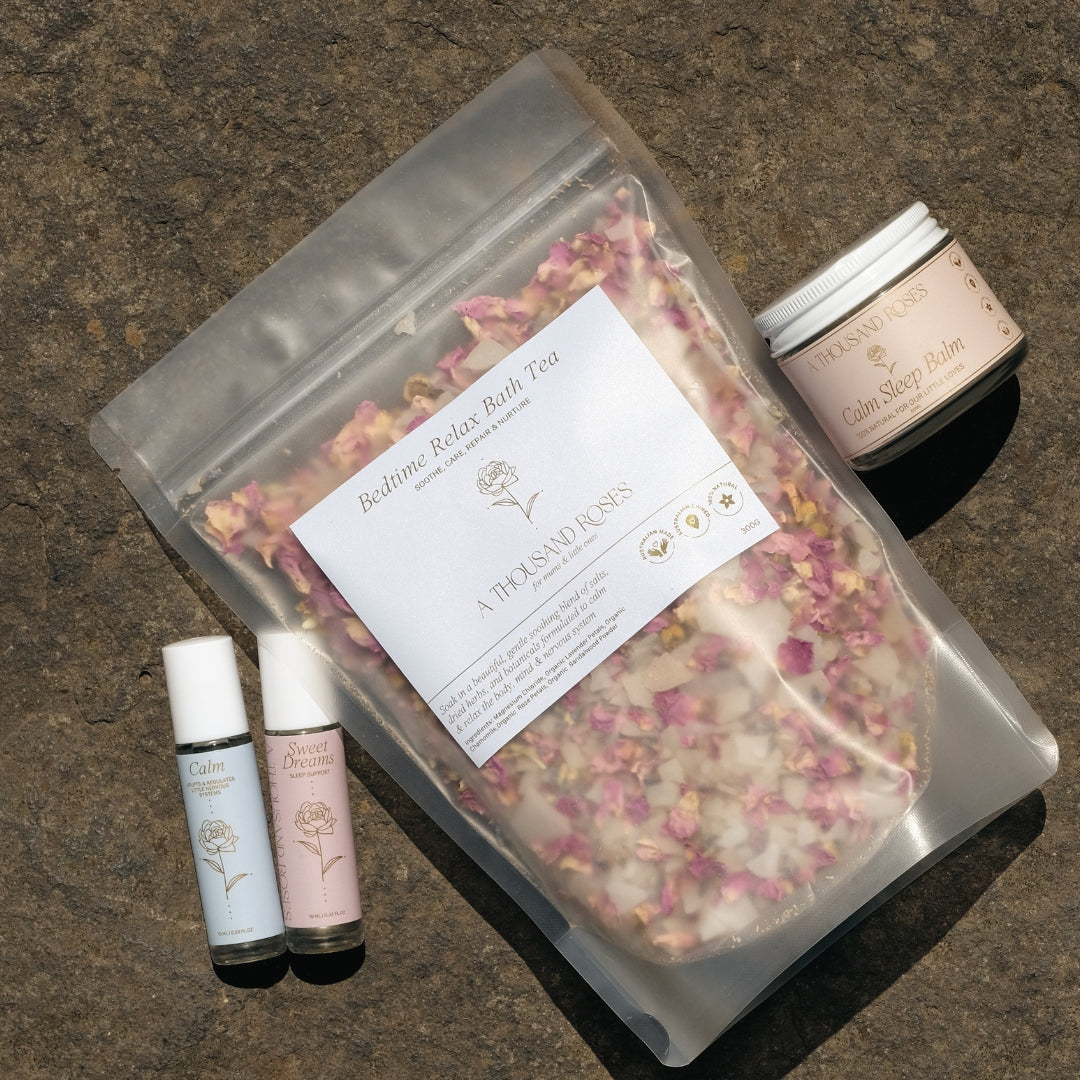
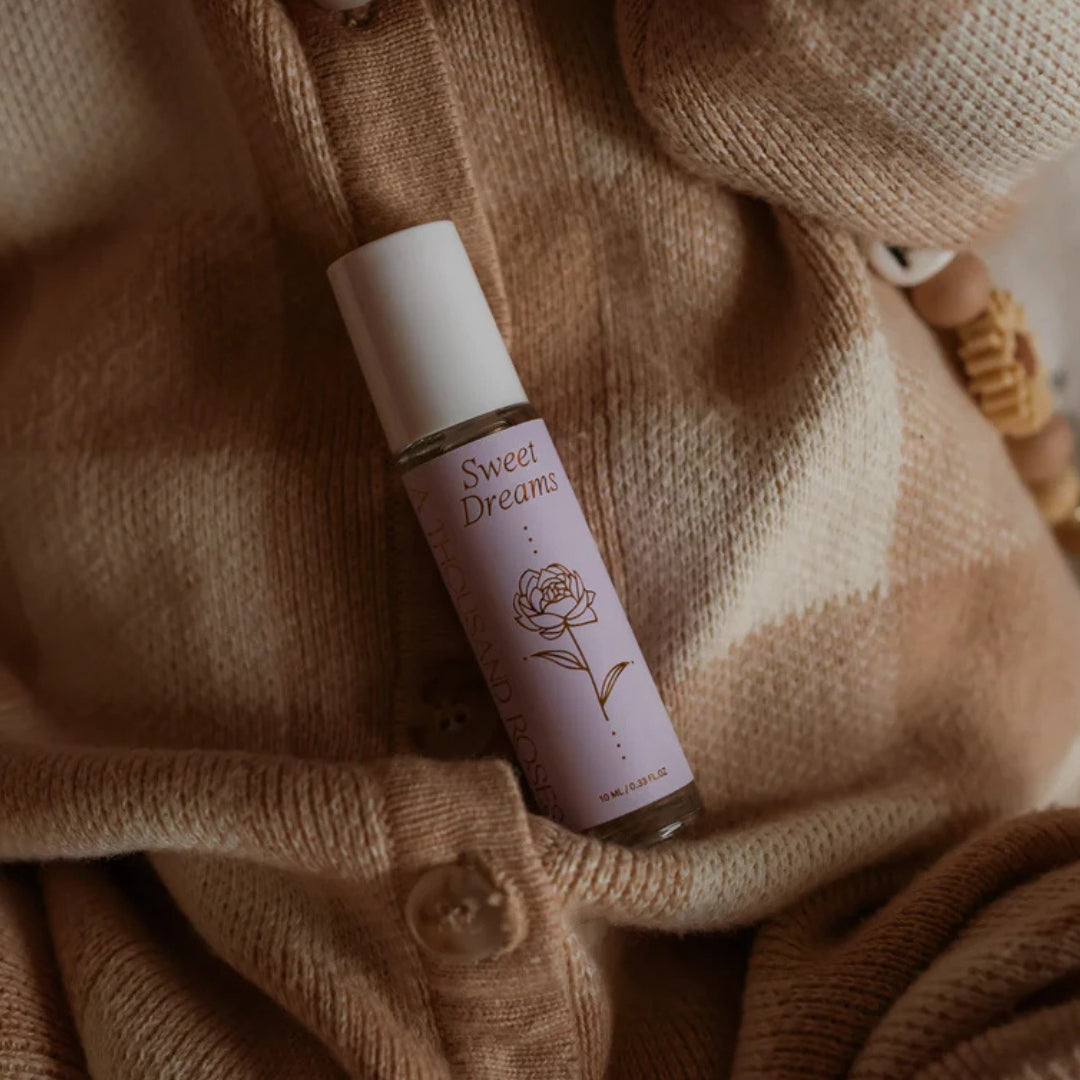
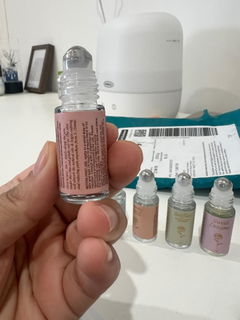
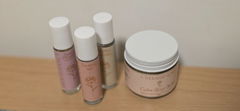
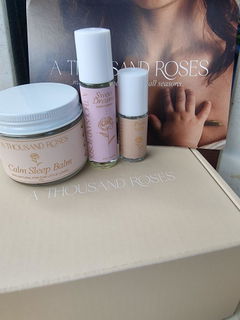
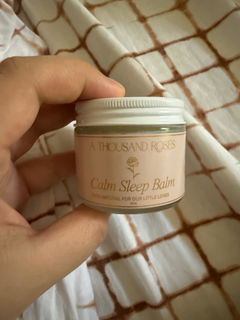
The A Thousand Roses Sleep and Calming Support collection includes the Calm Sleep Balm (magnesium for transdermal absorption, applied to feet), Sweet Dreams Roller (sandalwood, orange, vanilla) applied on the feet and back of neck, Calm Roller (Geranium, roman chamomile and orange) for anxious states, and Bedtime Relax Bath Tea (chamomile, lavender, magnesium for bath ritual). Together they support sleep regulation in babies and toddlers from newborn upward.
Why magnesium matters for sleep
Magnesium supports sleep through its role in the parasympathetic nervous system and GABA receptor function. Oral magnesium has limited use in young babies (digestive sensitivity and dosing complexity), but transdermal absorption through the soles of the feet is an established delivery route that bypasses the digestive system entirely. The soles of the feet have a high concentration of sweat glands and a relatively thin epidermis, making them the most efficient transdermal absorption site for magnesium in young children.
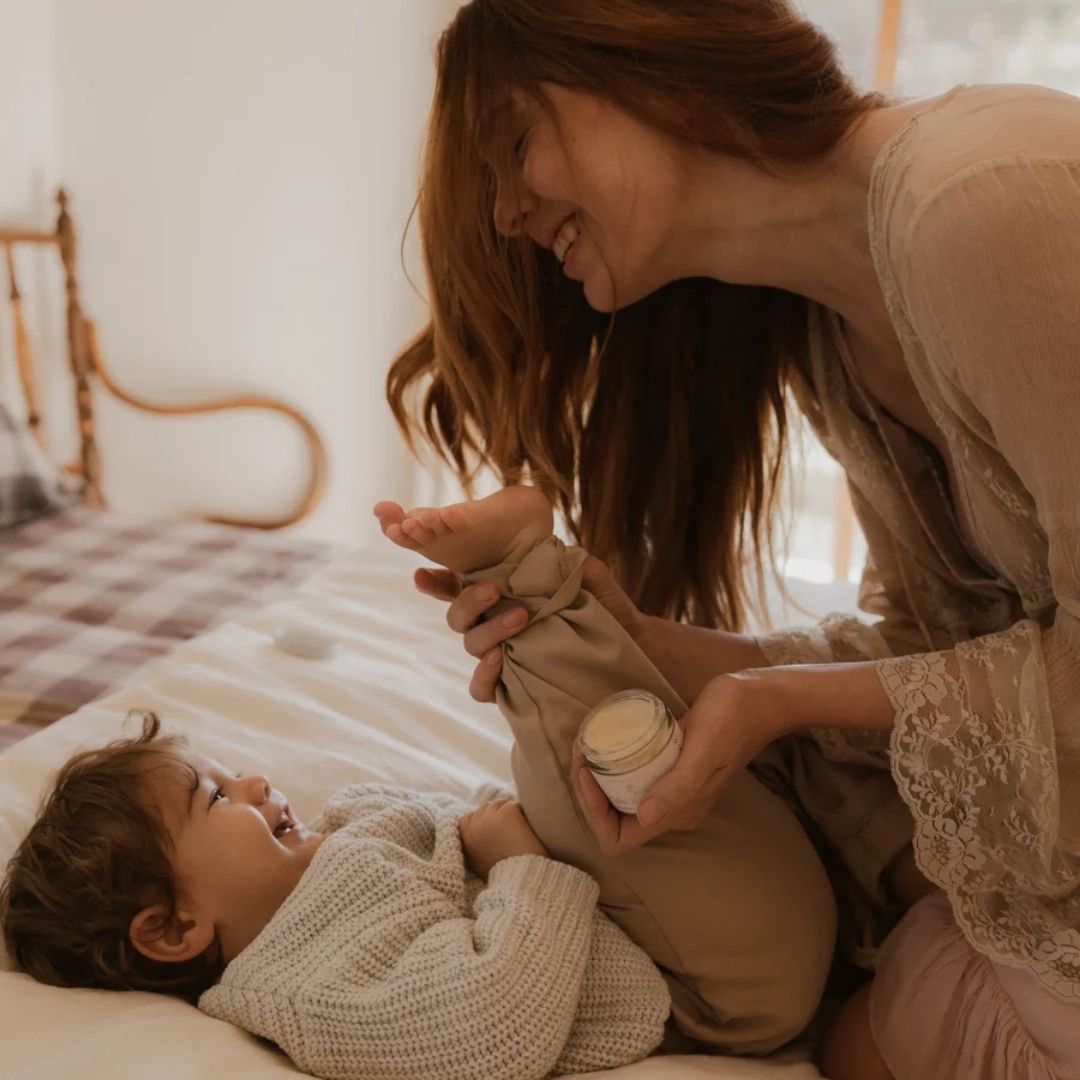
The Calm Sleep Balm contains magnesium combined with sandalwood, vanilla and a coconut and beeswax base. Applied to the soles of both feet at bath time, the balm delivers magnesium gradually over the first sixty minutes of sleep, which is the window during which most settling difficulties occur. Many families in our community describe the sustained-sleep effect as the most noticeable difference, with babies waking less in the first half of the night even when the bedtime resistance was not severe.
Building the right routine for your child's age
For newborns and babies under three months, the simplest effective routine is bath, Calm Sleep Balm and quiet feeding. For babies three to twelve months, add the Sweet Dreams Roller to feet or back of neck after the balm. For toddlers, the full ritual (bath with Bath Tea, balm to feet, Sweet Dreams Roller to back of neck) is most effective. The Calm Roller is added on top during particularly difficult evenings or during sleep regressions/over stimulation.
The honest reality of baby sleep is that products do part of the work and consistency does most of it. A routine that uses one product nightly without exception will outperform a routine that uses three products inconsistently. We recommend choosing the smallest practical routine and holding it for at least two weeks before judging effectiveness. If three to seven nights of consistent application shows no improvement, the issue is usually not the product.
Handling sleep regressions
Sleep regressions are a normal part of childhood development, often occurring around four months, eight months, twelve months and eighteen months as little ones move through important developmental leaps. While these seasons can temporarily disrupt even the best sleepers, one of the most helpful things parents can do is keep their bedtime ritual as consistent as possible.
This is where our Sleep Collection can become an invaluable part of your evening routine. Our Bedtime Relax Bath Tea provides a gentle mineral and botanical bath before bed, while our Calm Sleep Balm delivers magnesium alongside nourishing botanicals through a calming bedtime massage. Our Sweet Dreams Roller contains naturally occurring aromatic compounds traditionally valued for supporting relaxation and helping prepare the body and mind for sleep, while our Calm Roller offers additional support during evenings when little ones are feeling especially overwhelmed or unsettled. Together, these products work in harmony with your bedtime routine, supporting the nervous system and creating the biological conditions that help little ones settle more easily into sleep.
It can be tempting to change everything when sleep suddenly becomes difficult again, but developmental leaps are temporary. We encourage families to trust the rituals they've built and continue supporting their little one with gentle connection, consistency and natural tools that work alongside the body's own sleep processes.
When to escalate beyond products
If sleep difficulties are severe (more than three to four night wakes per night beyond the newborn phase), if they persist for more than four weeks without improvement, or if they are associated with other symptoms (breathing difficulties, snoring, feeding issues), the most useful next step is consulting your maternal health nurse, GP or a paediatric sleep practitioner. Natural products support normal sleep development; they do not address underlying medical or behavioural sleep disorders.
We are clear about this because some sleep challenges have causes that no roller can address: obstructive sleep apnoea, reflux, allergy-related discomfort, behavioural patterns established through inconsistent settling. Paediatric sleep practitioners can identify these and provide tailored guidance. We see the Sleep range as one component of a healthy infant sleep approach, not as a replacement for professional support when challenges persist.