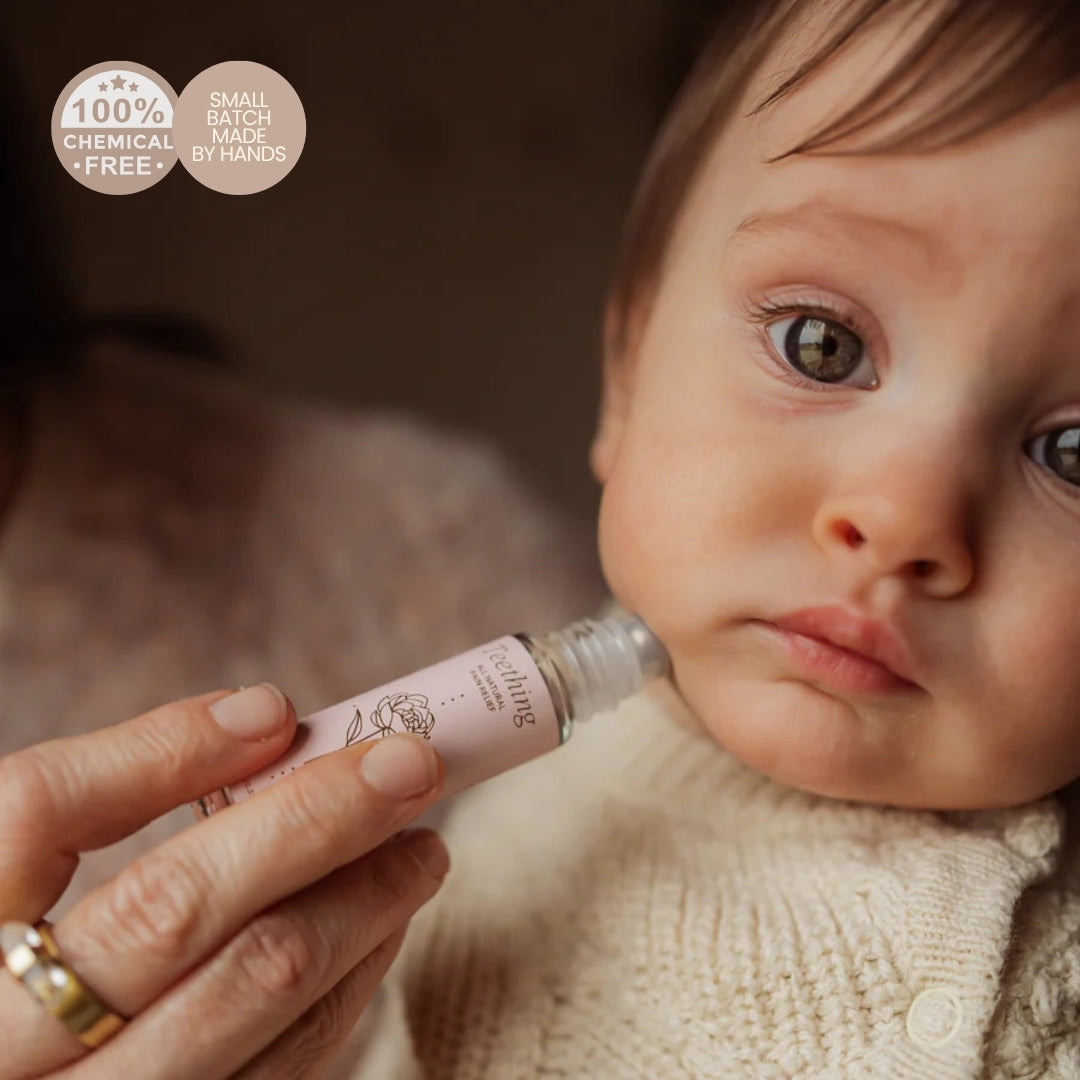
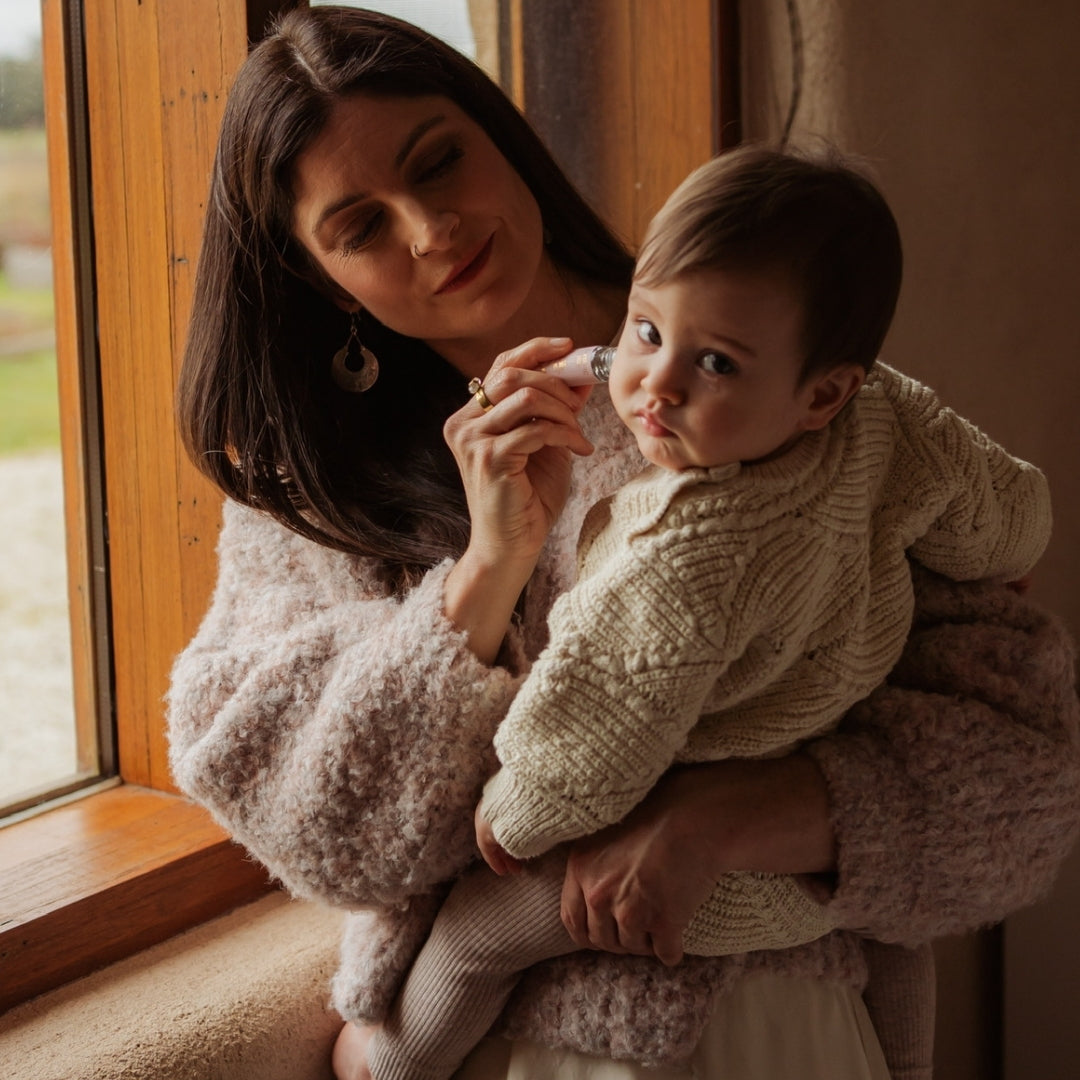
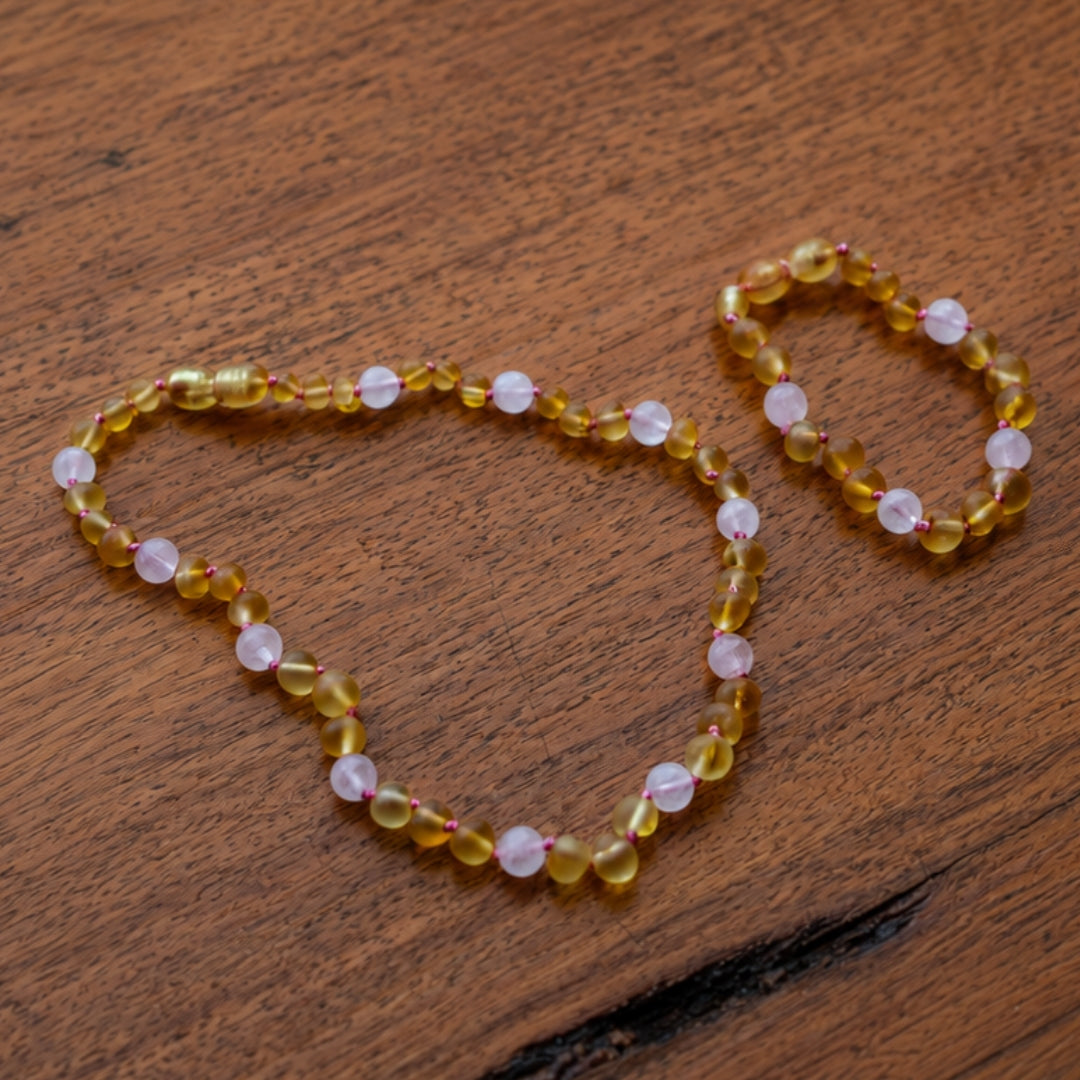
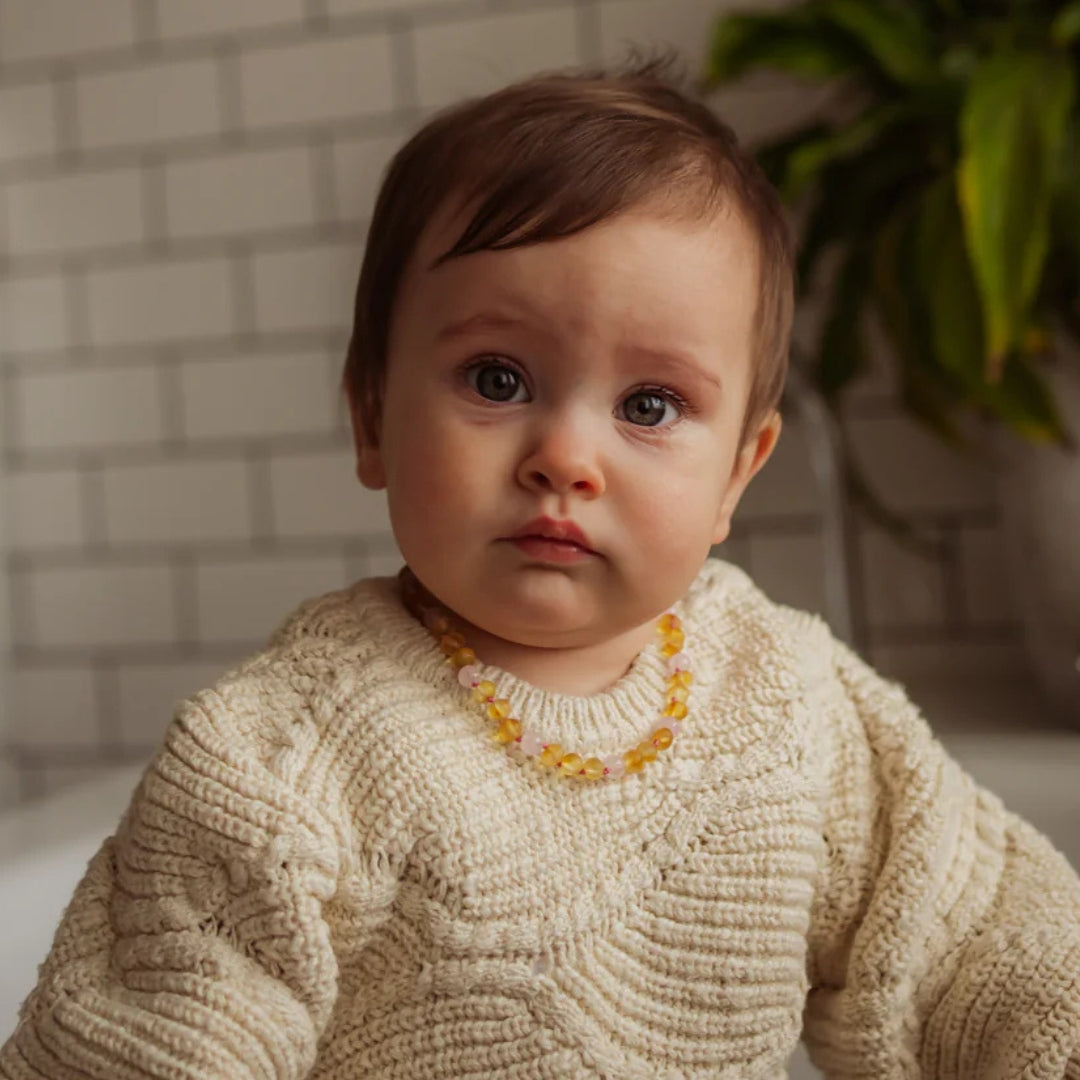
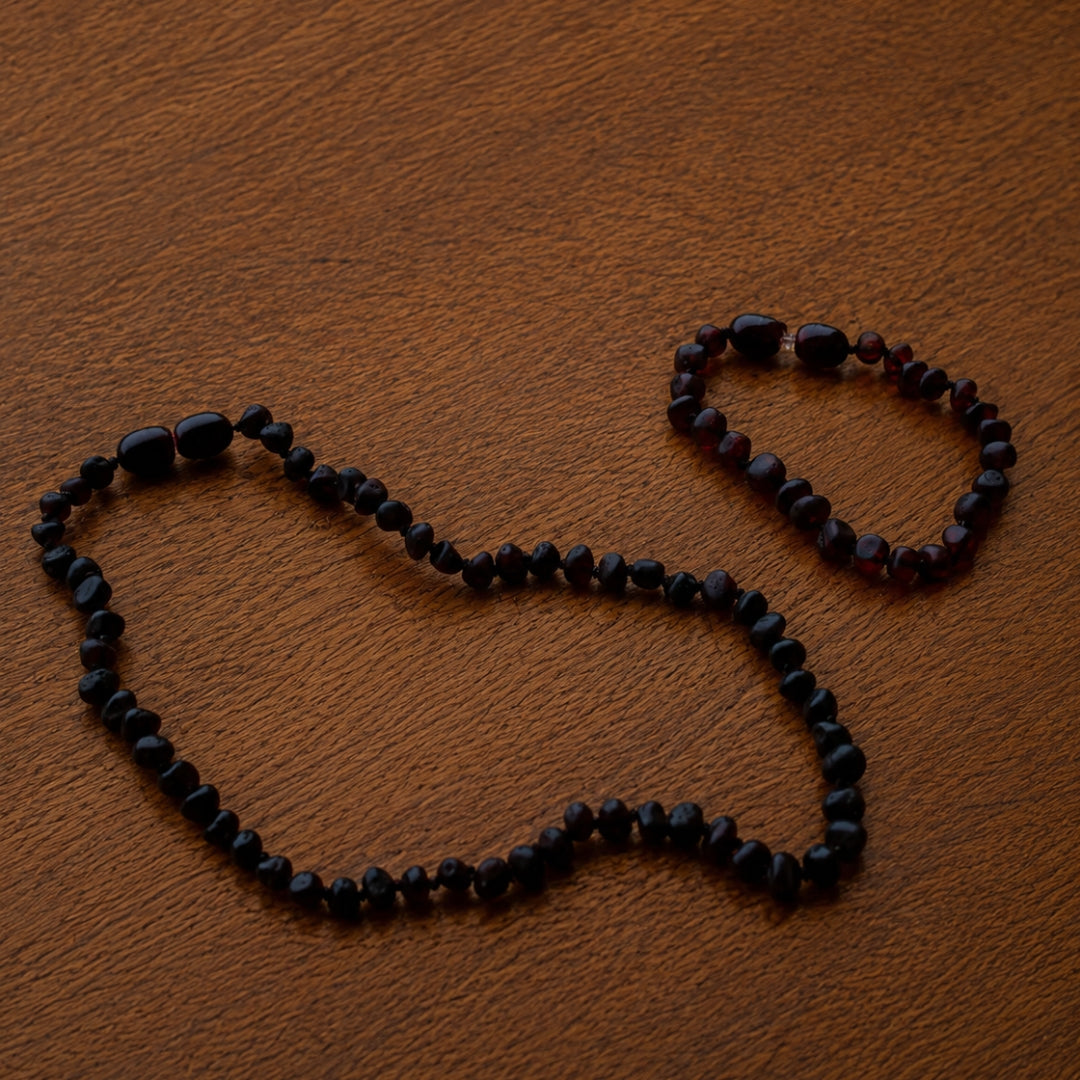
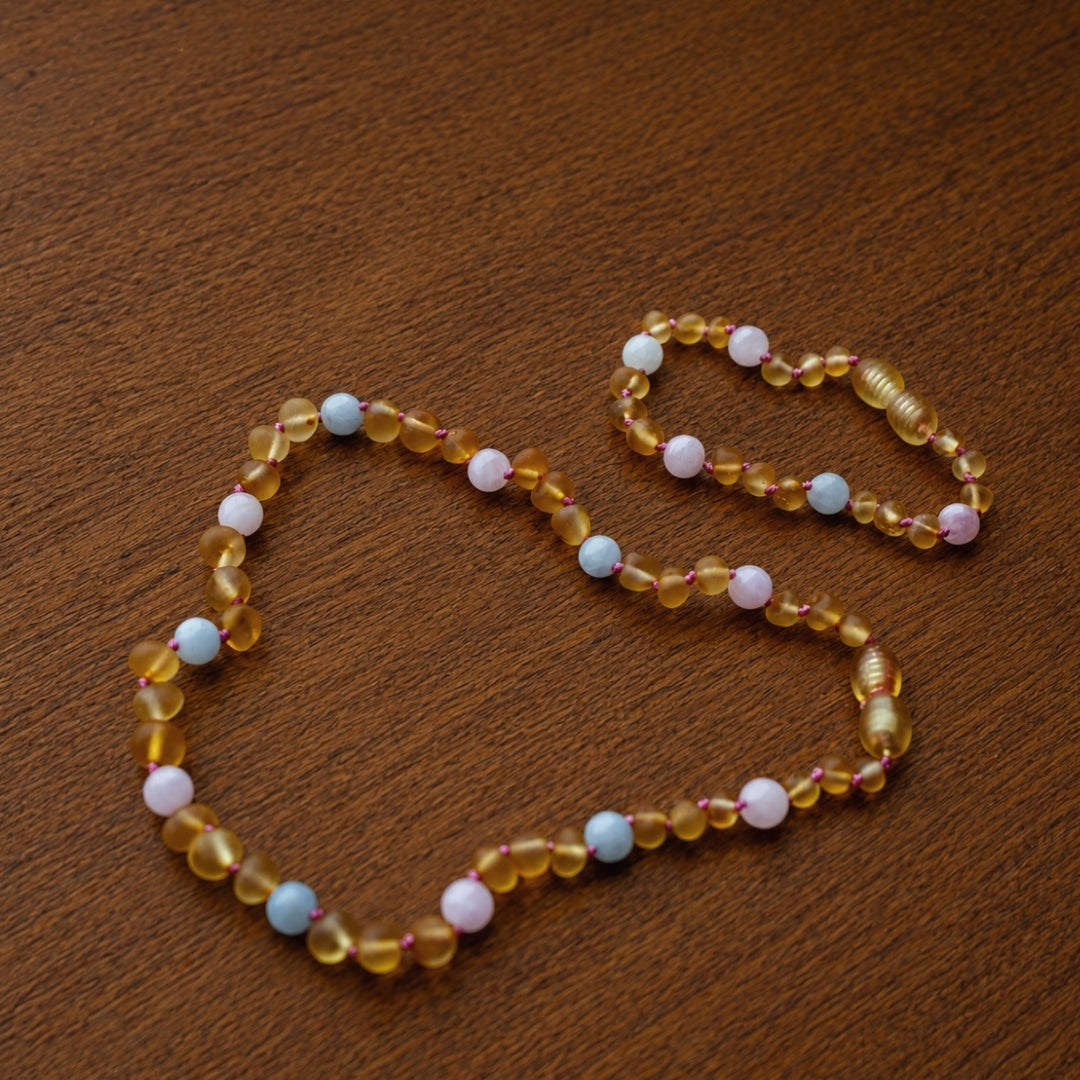
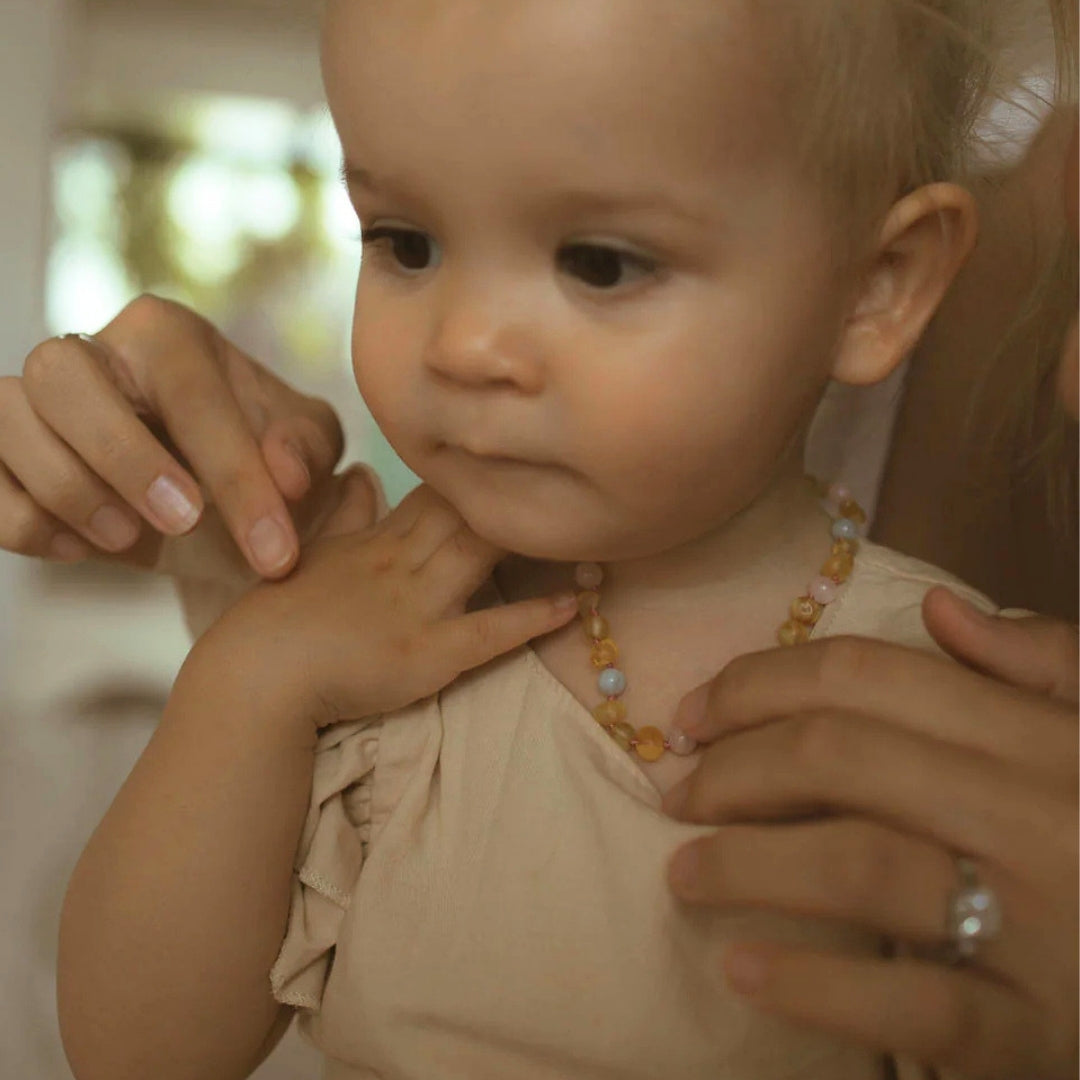
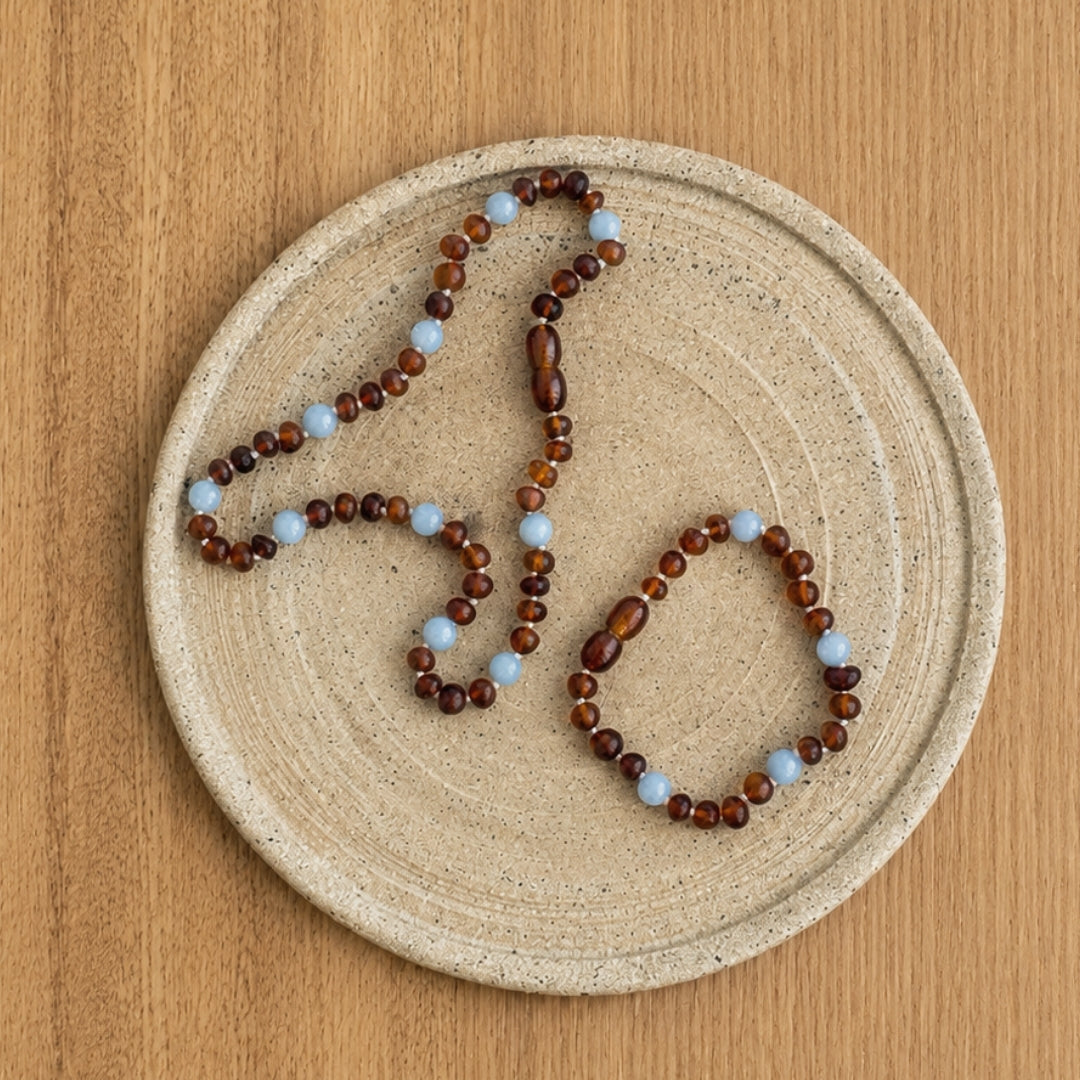
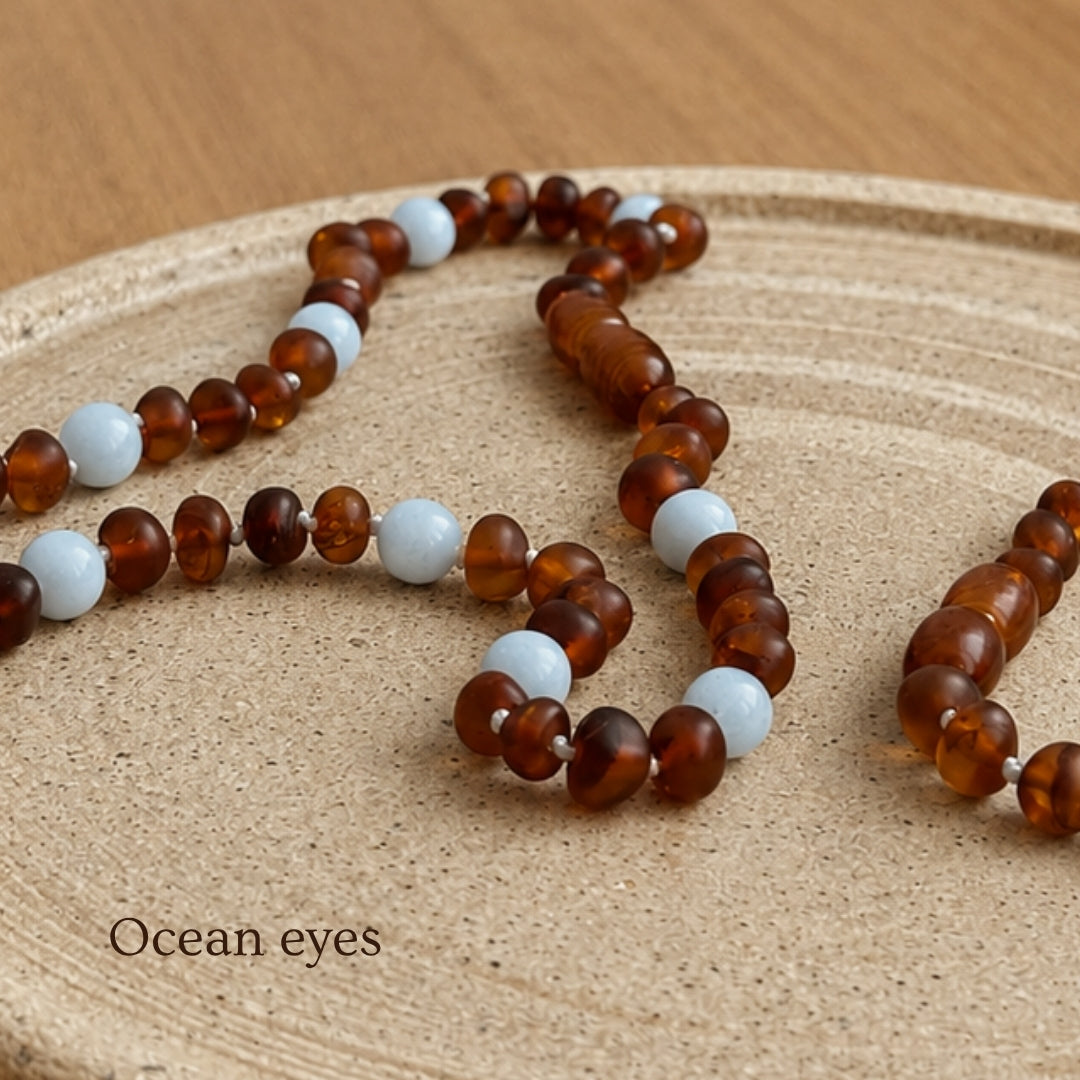
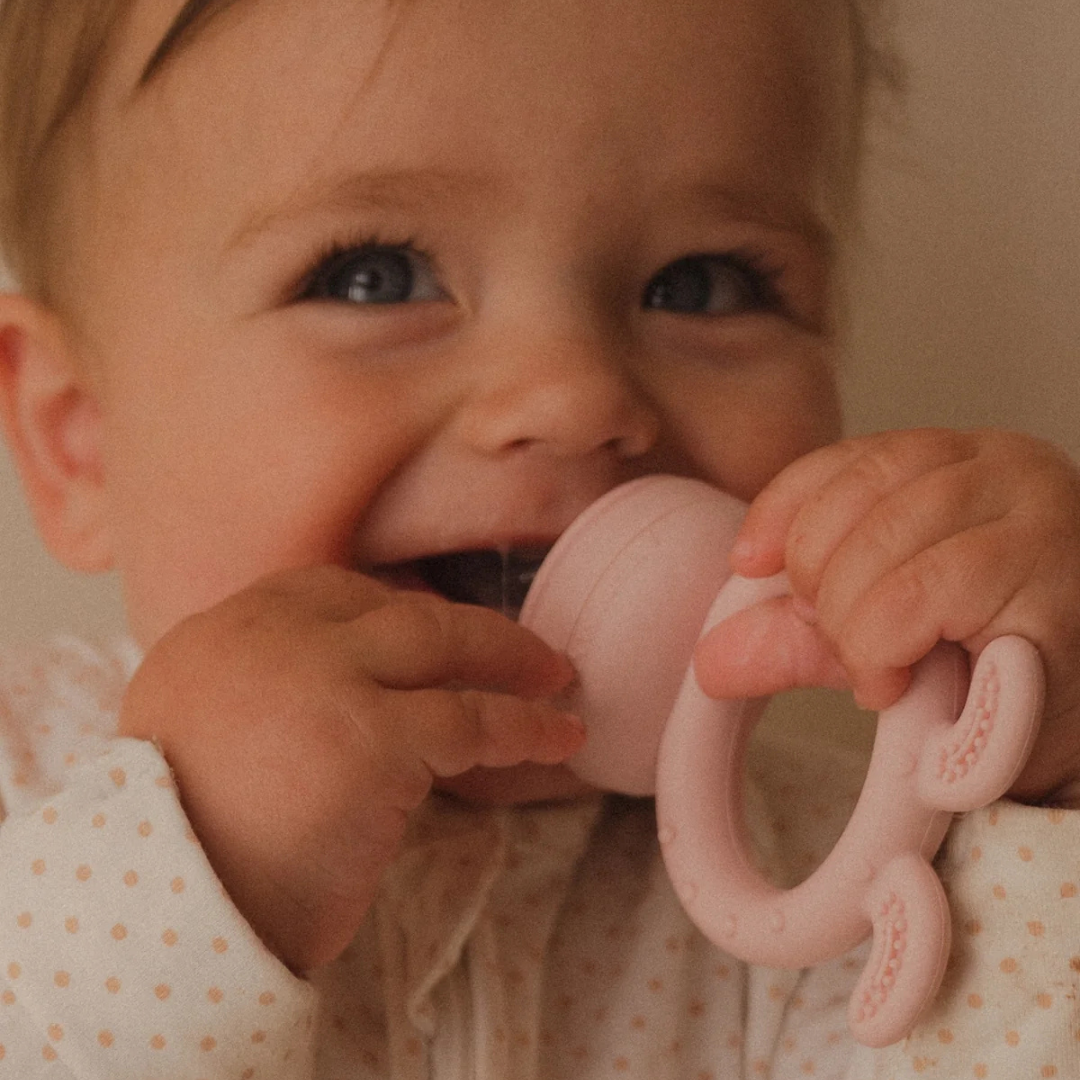
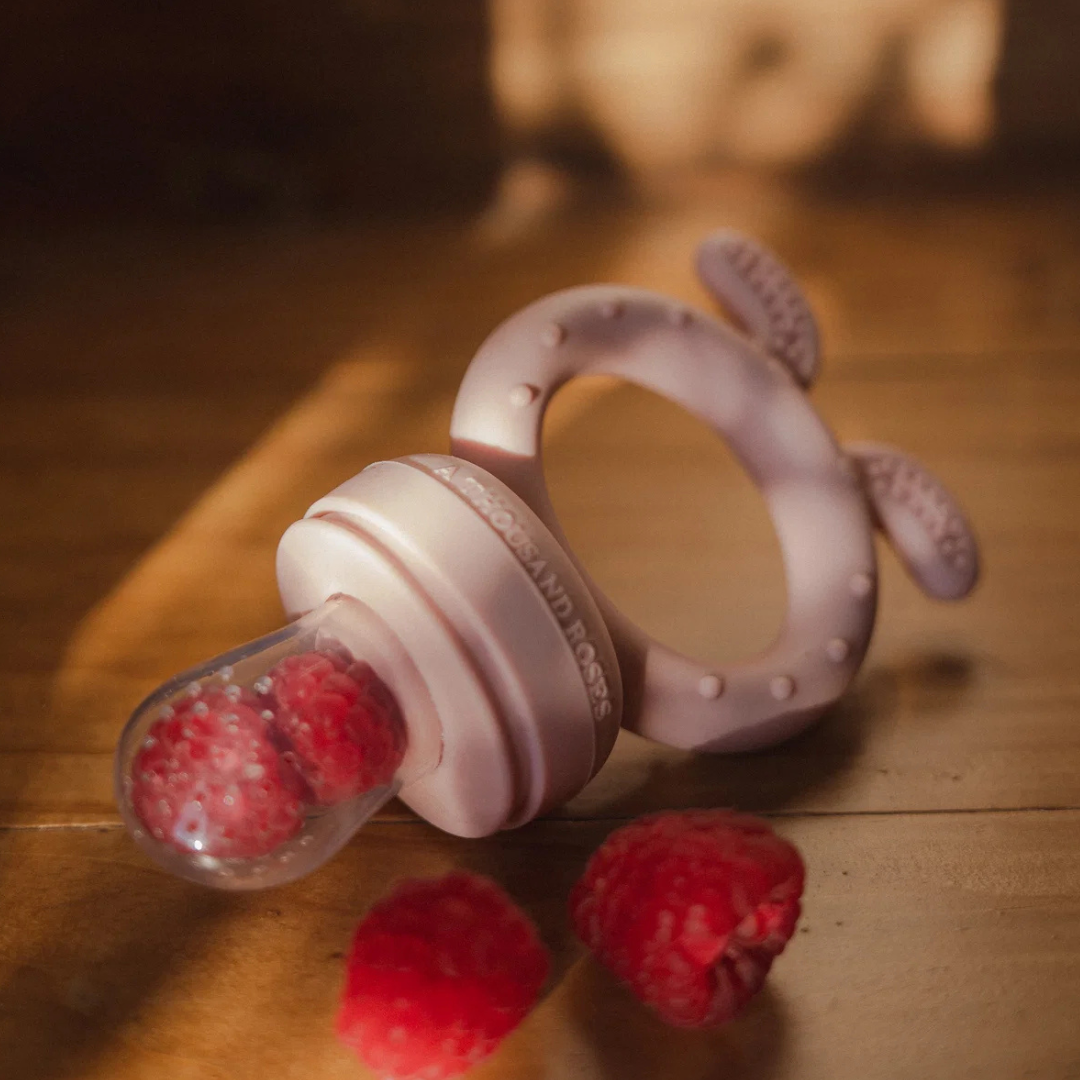
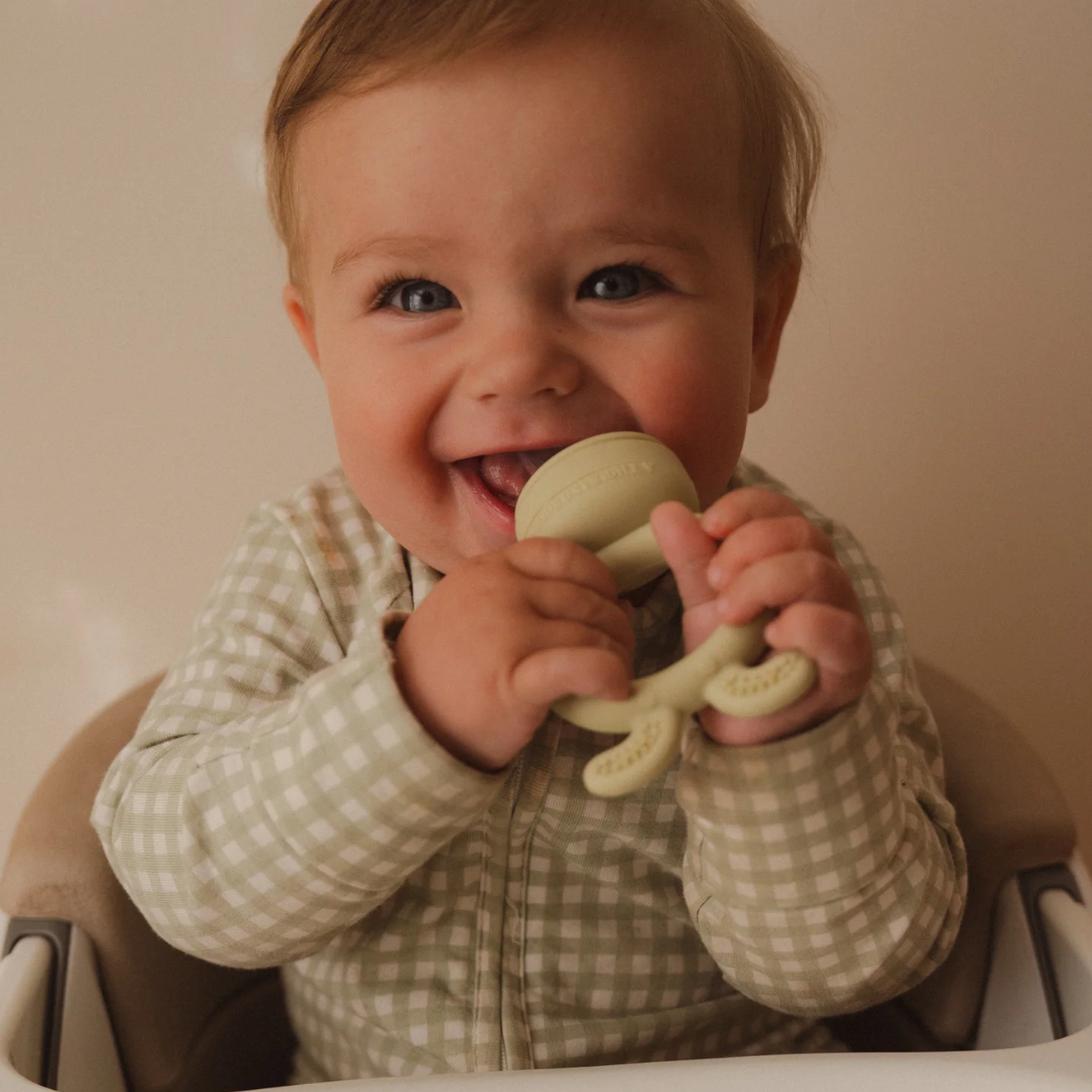
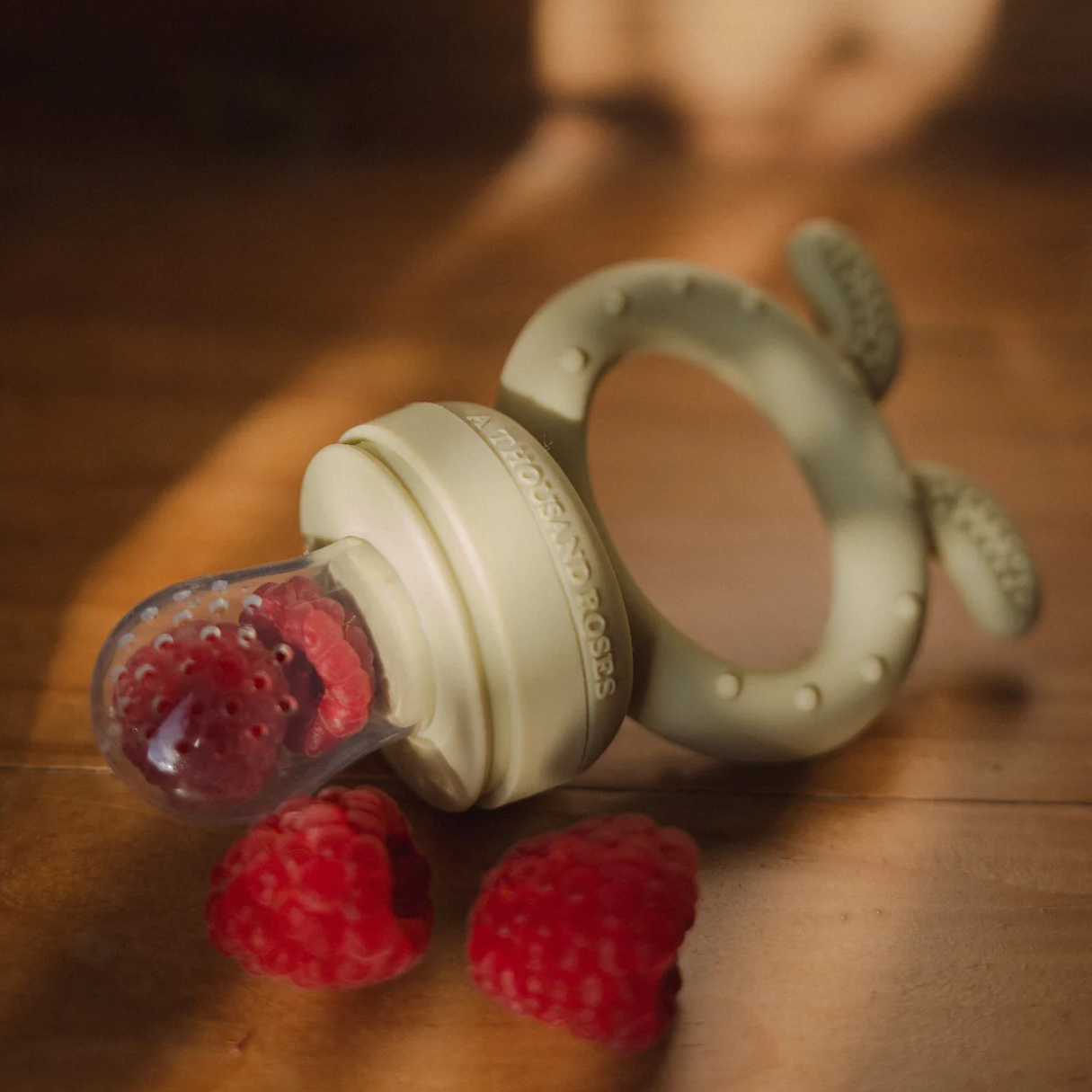
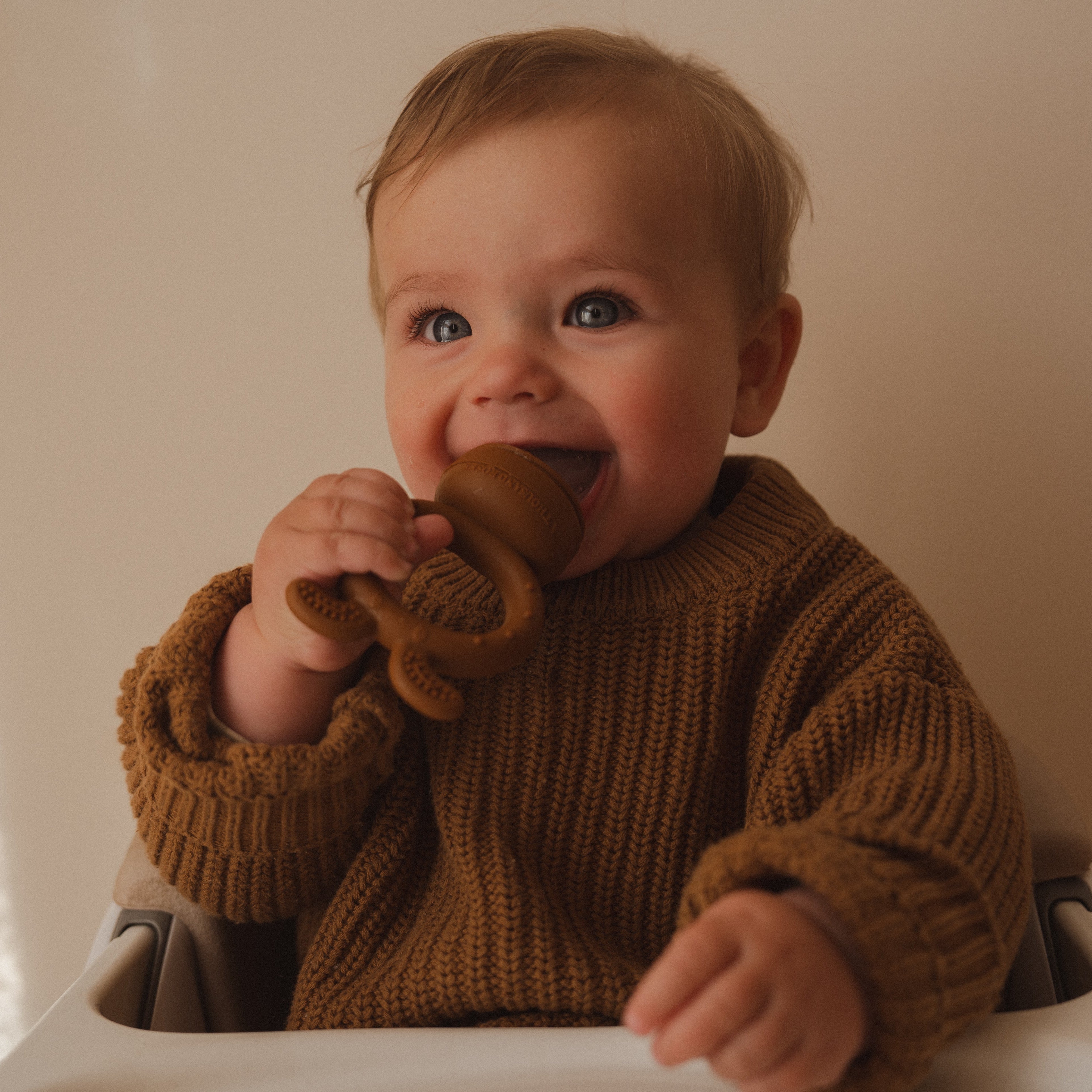
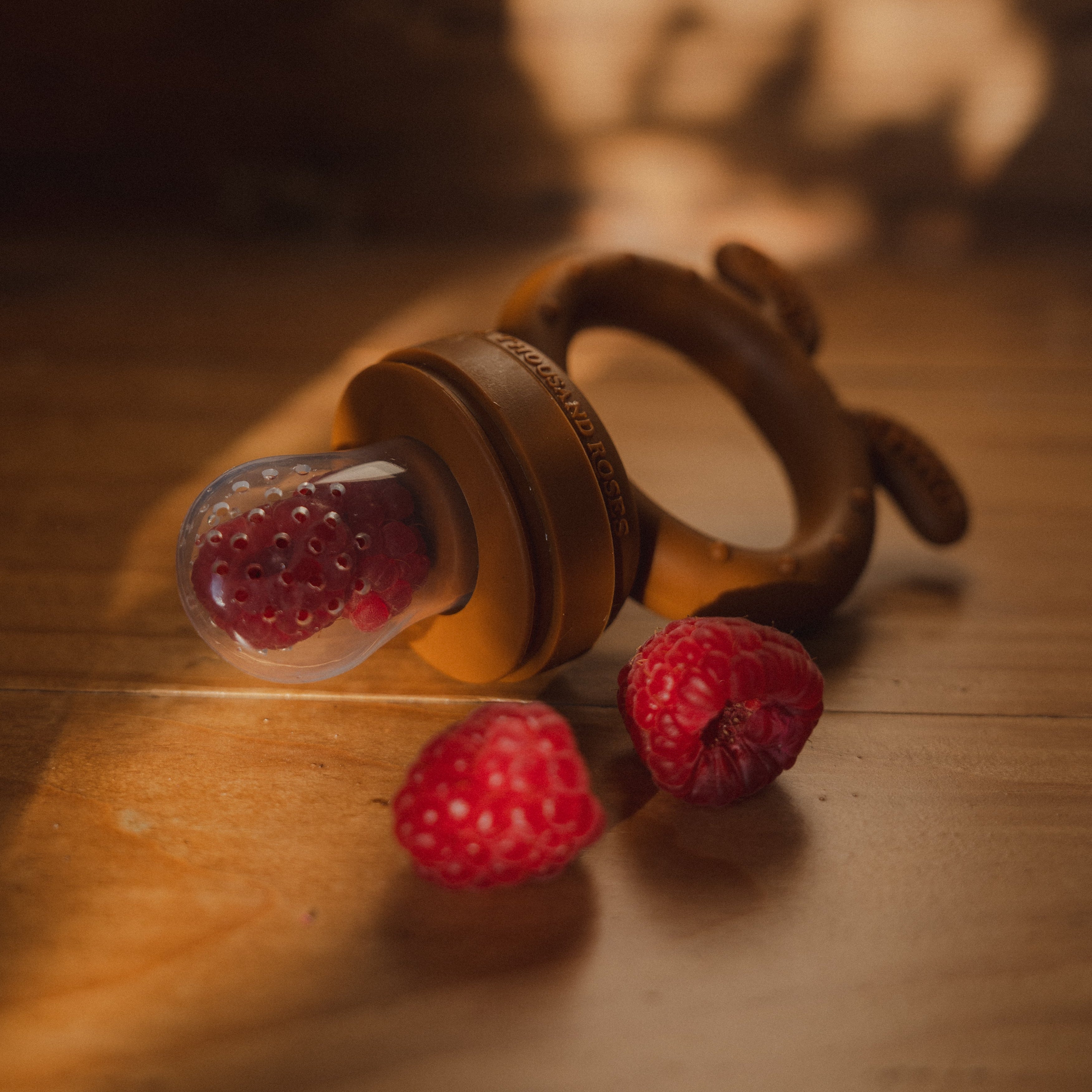
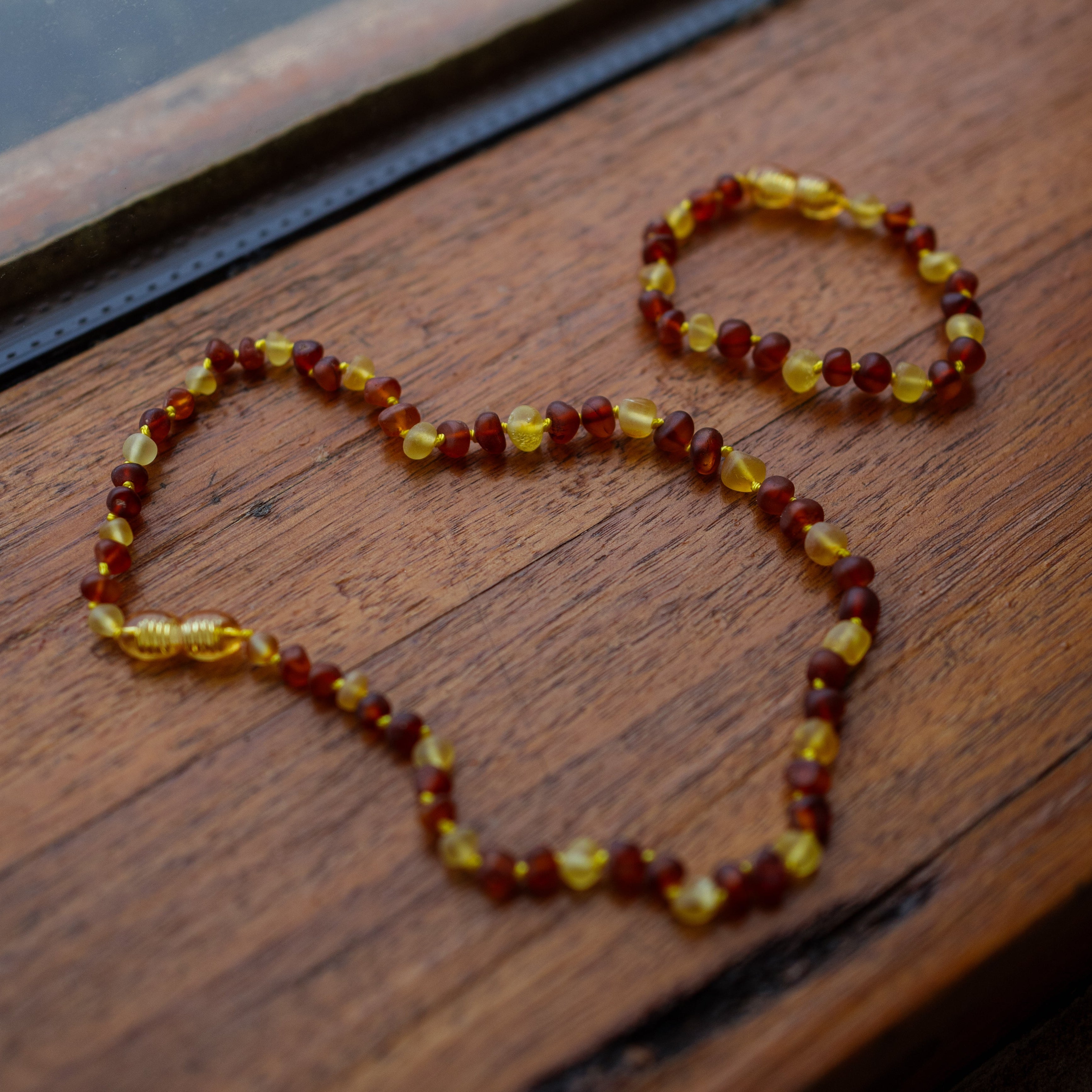
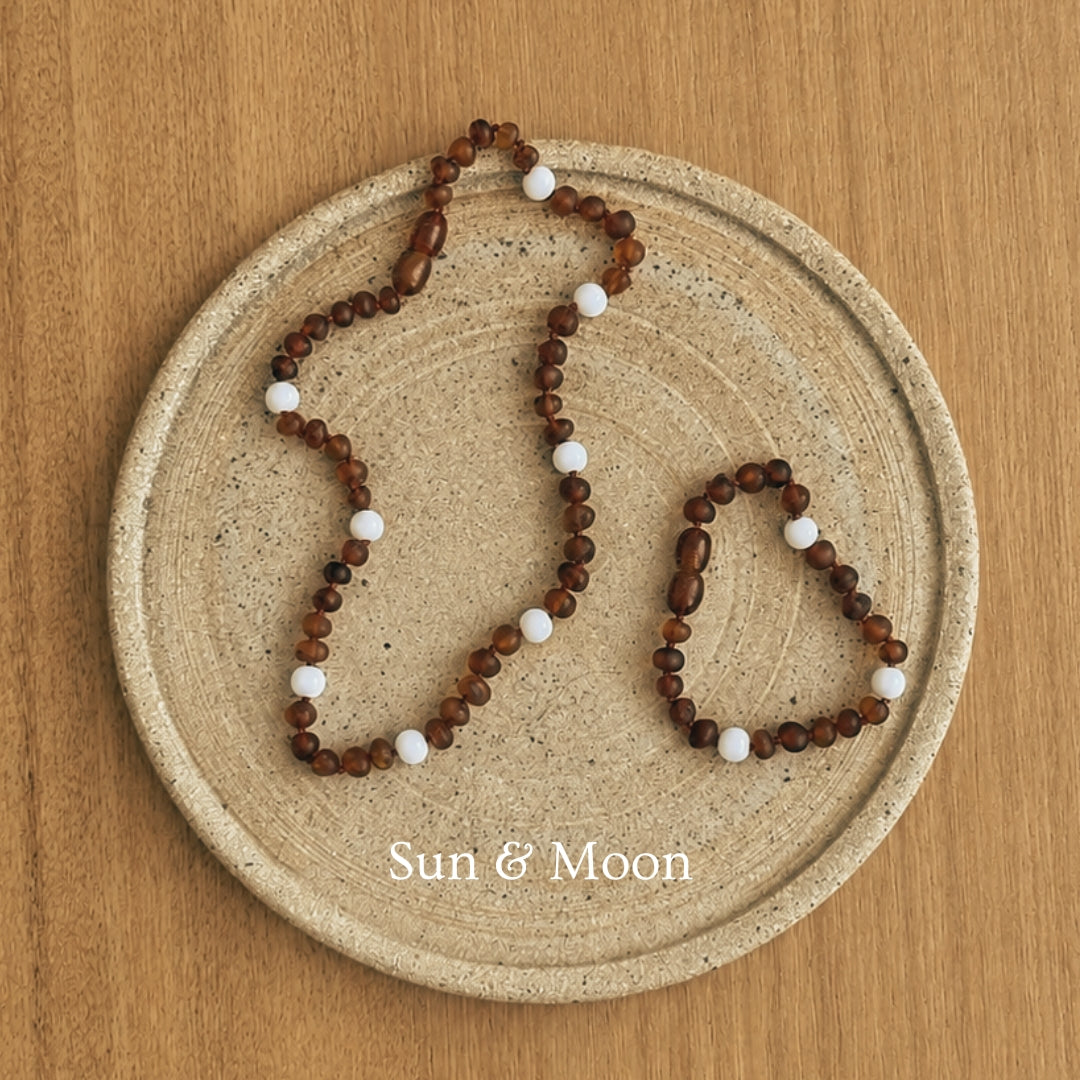
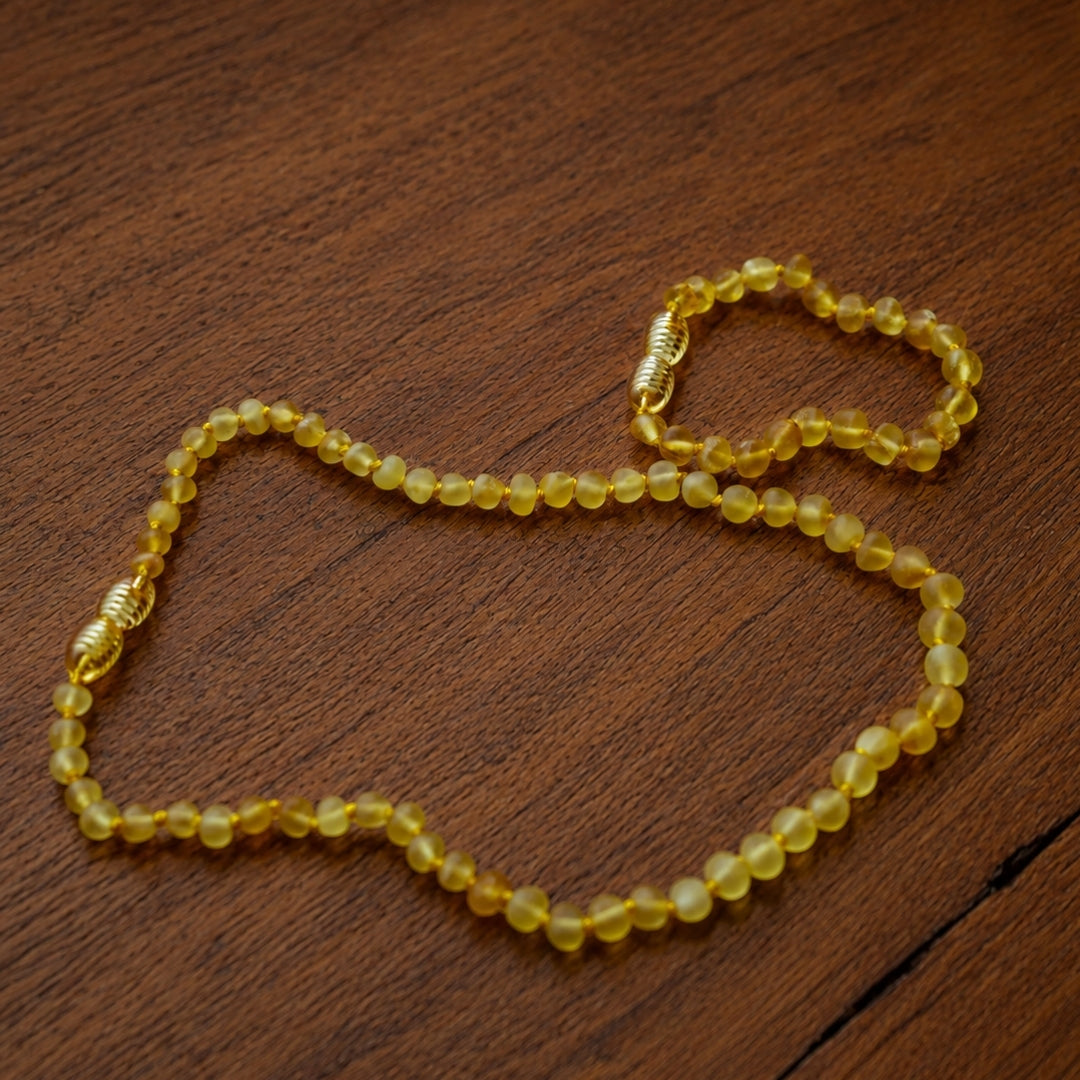
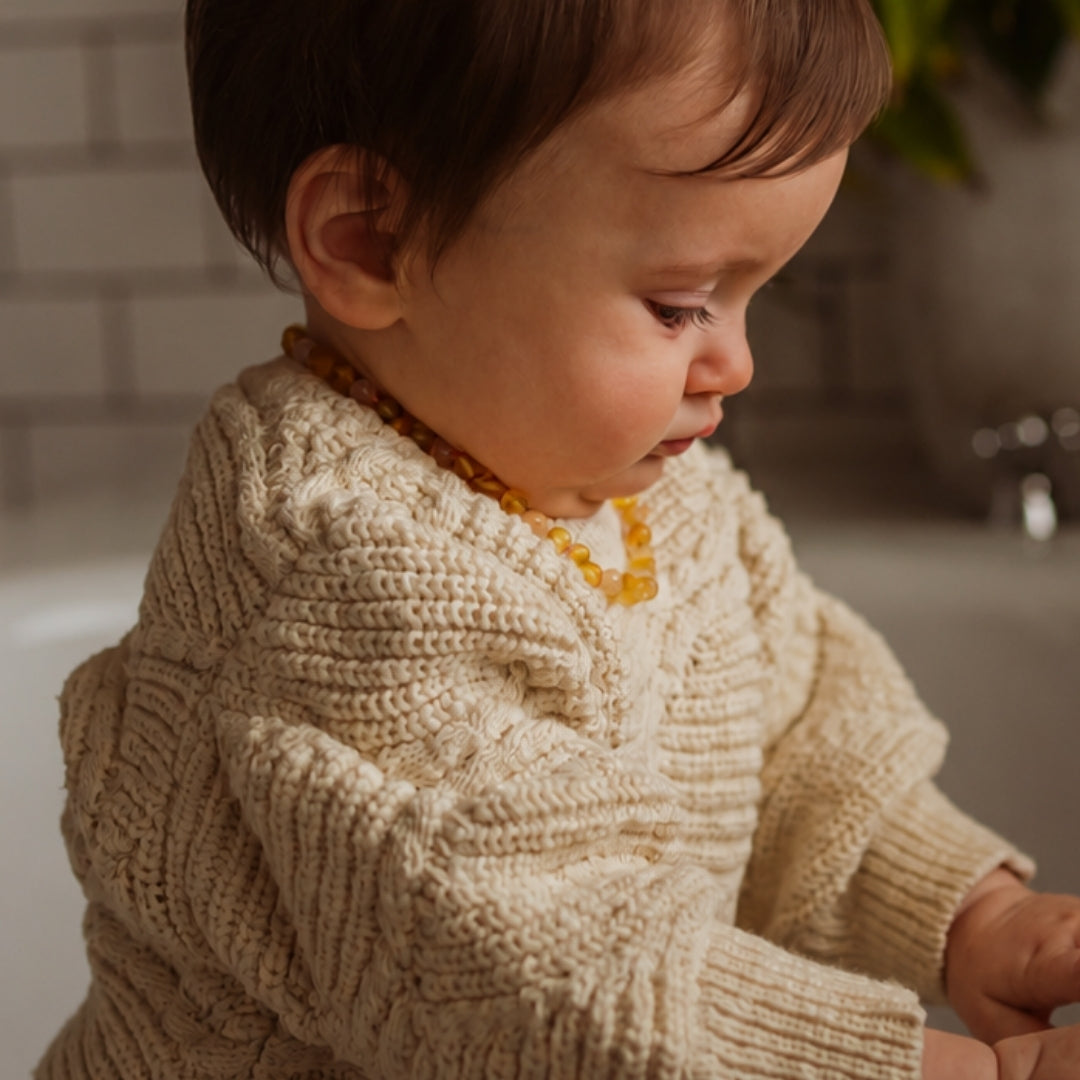
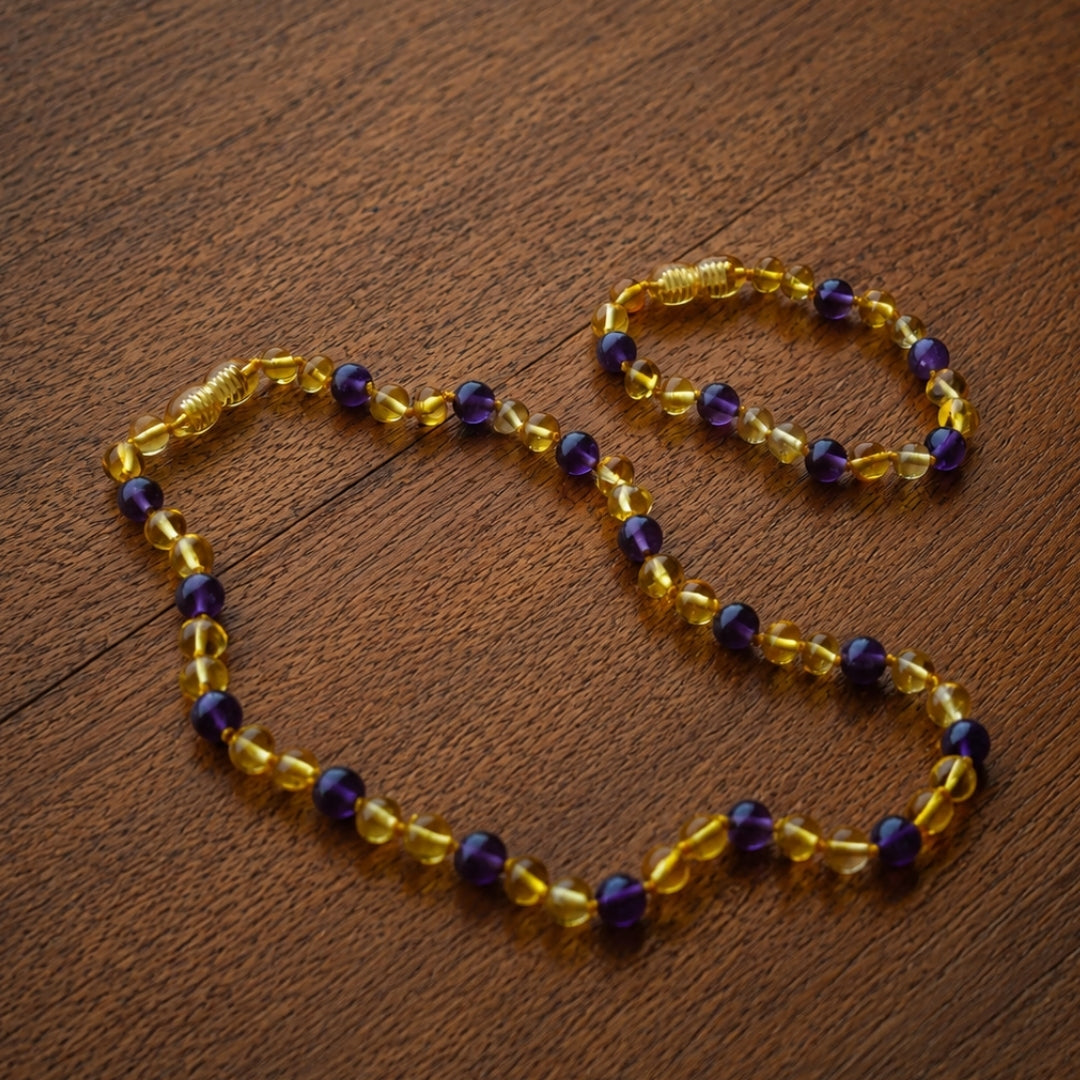
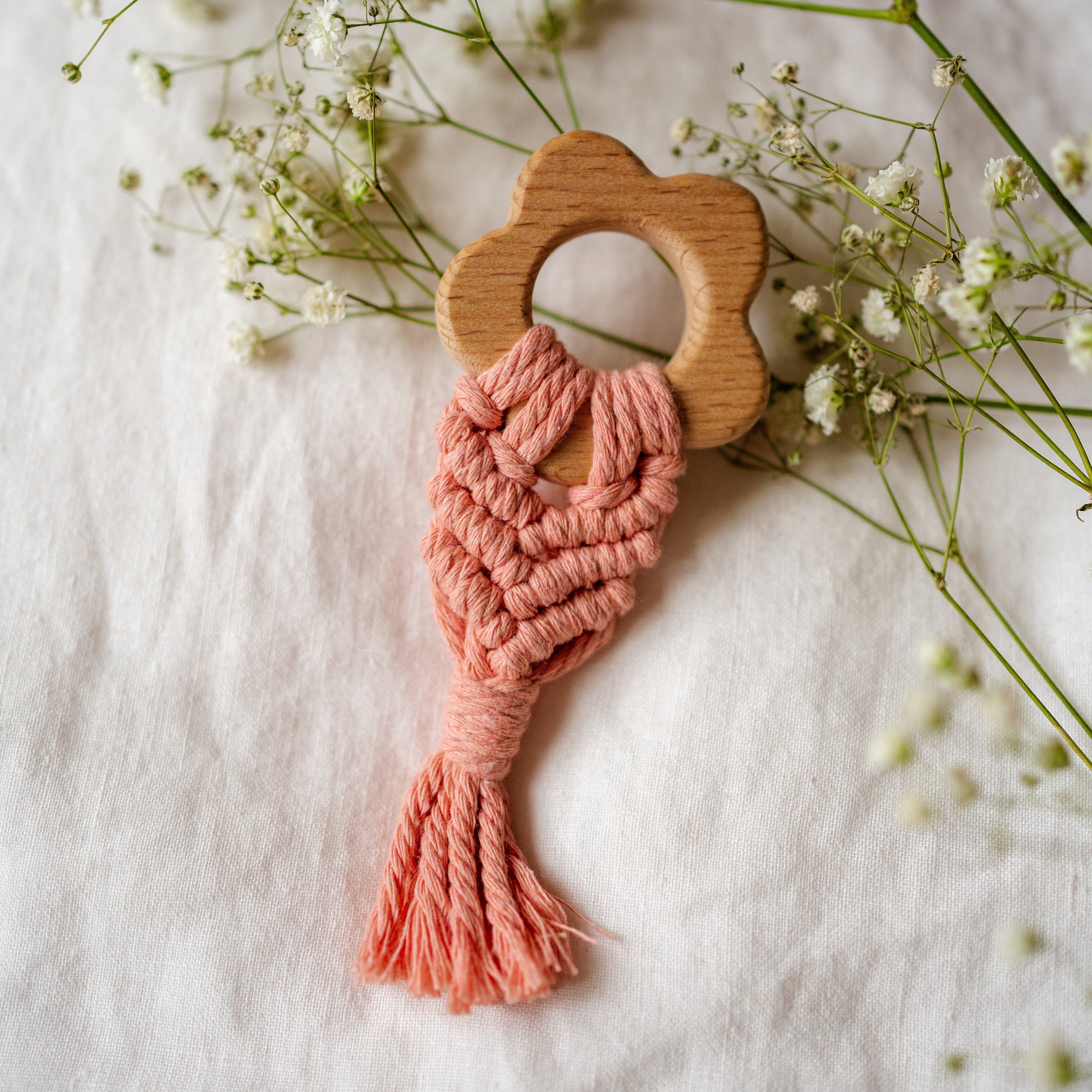
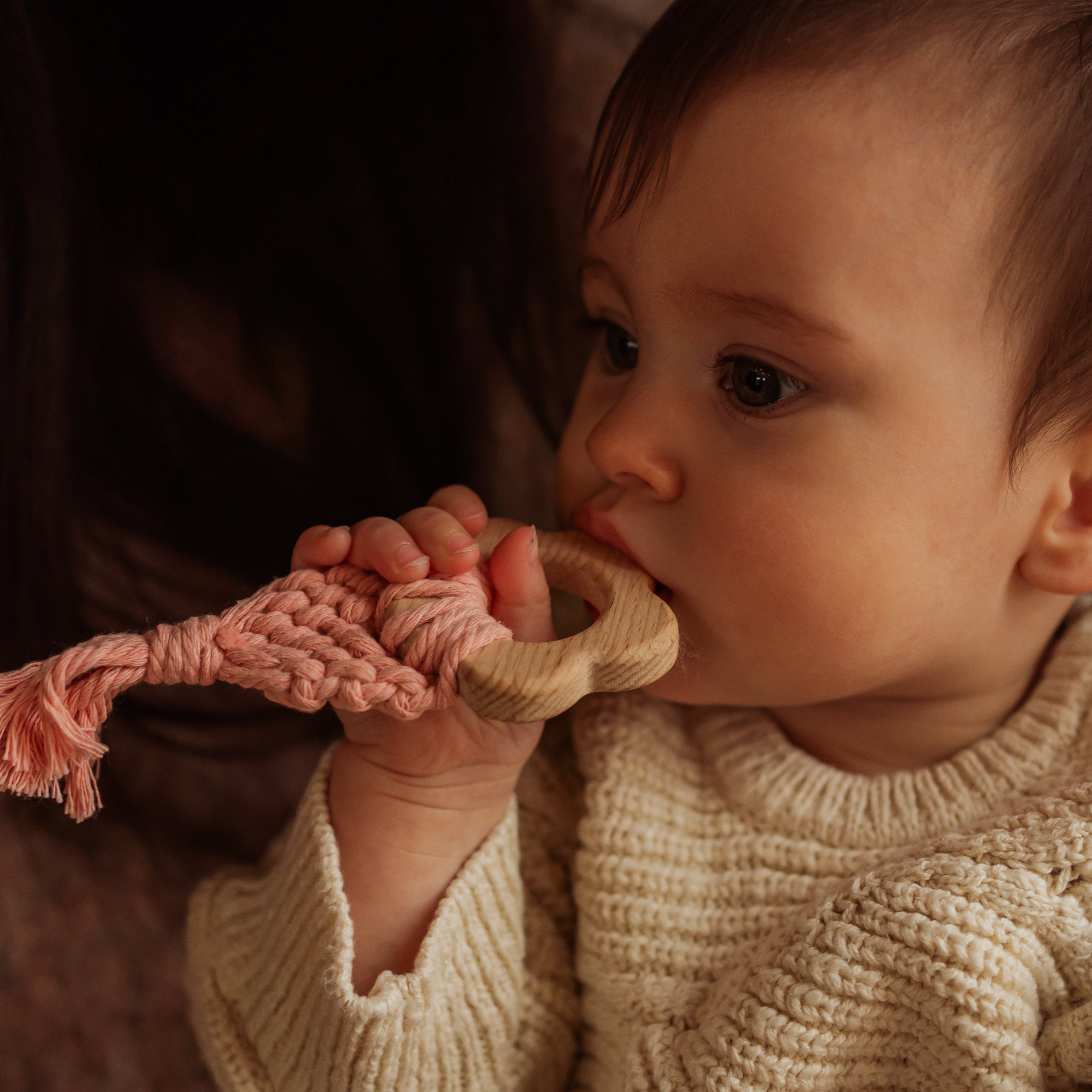
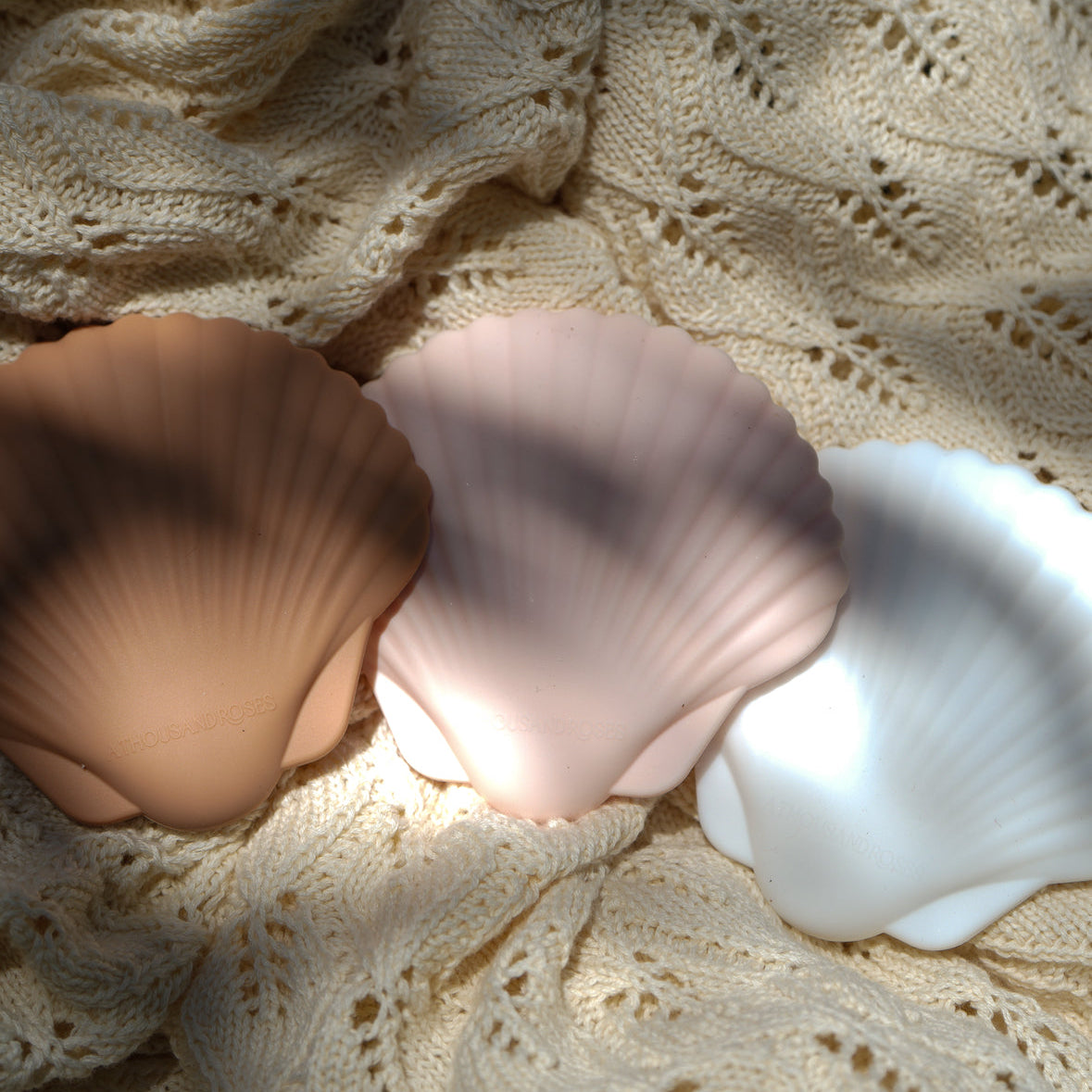
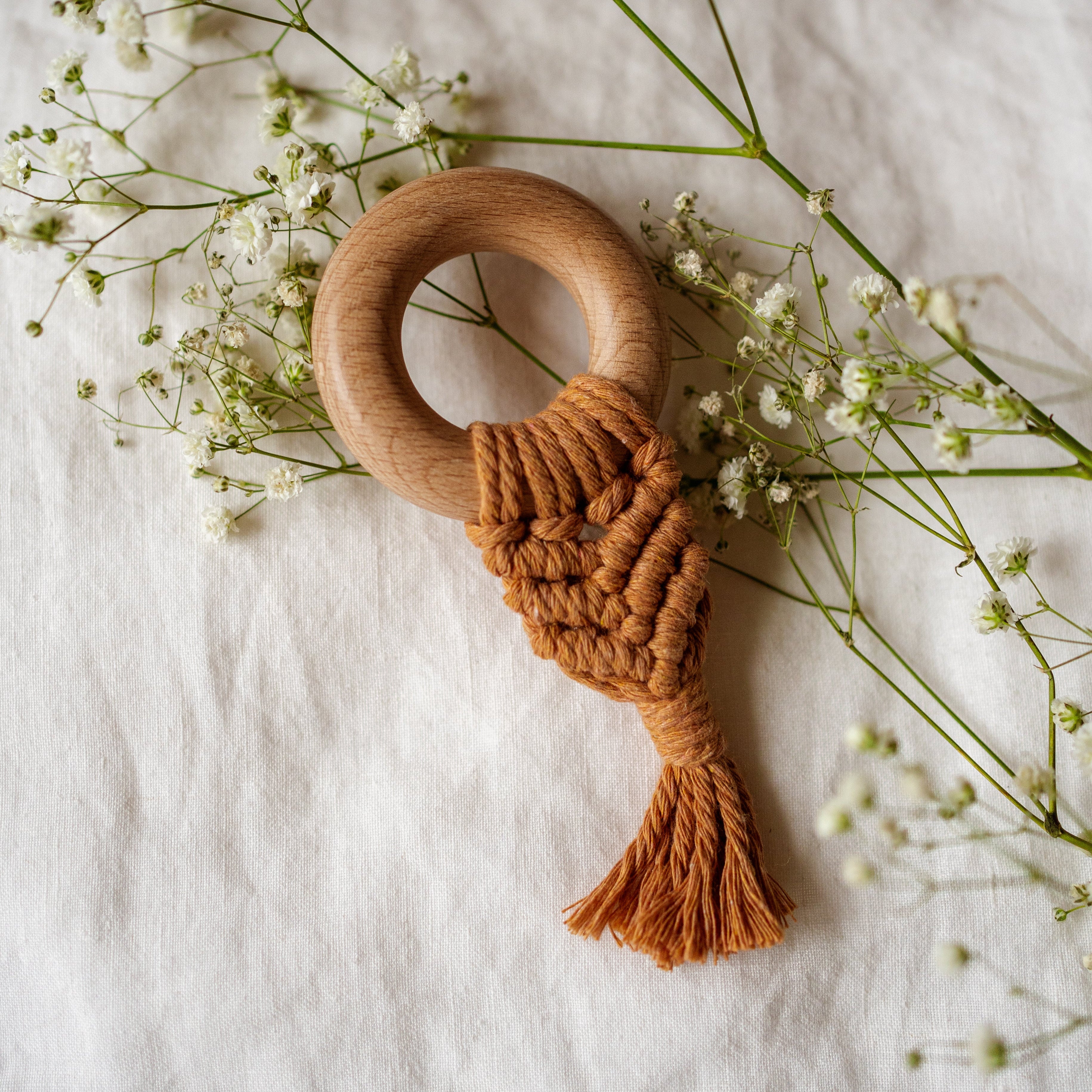
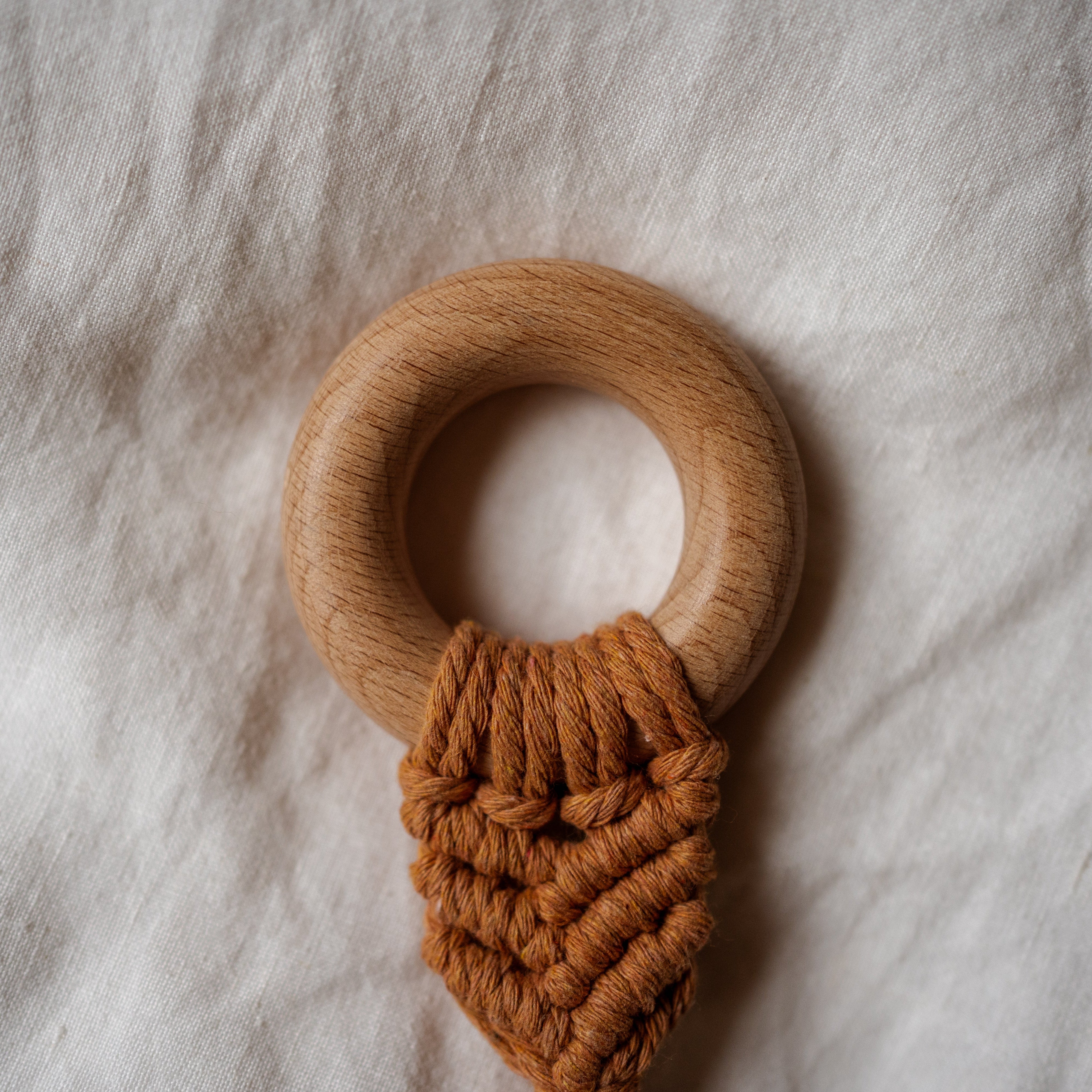
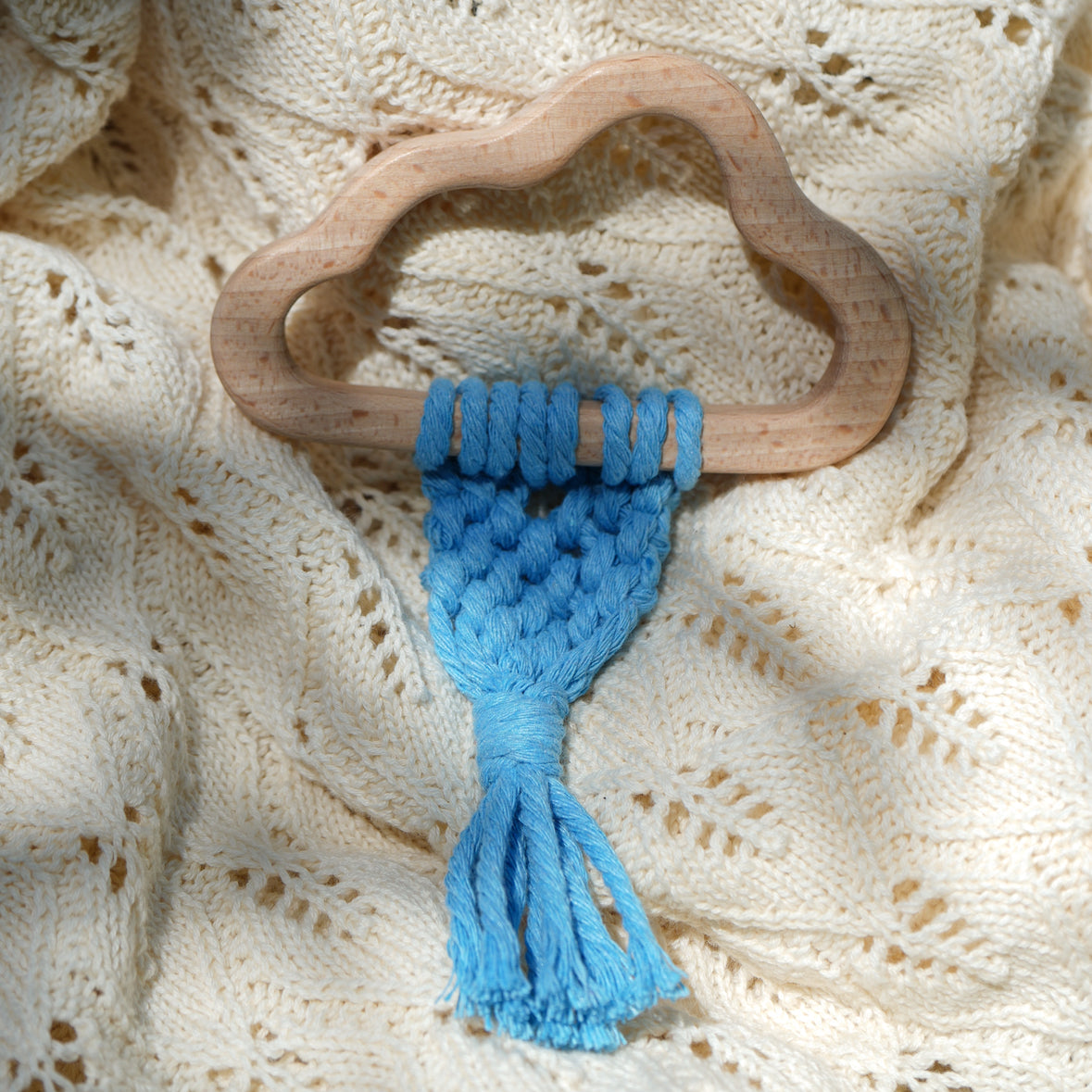
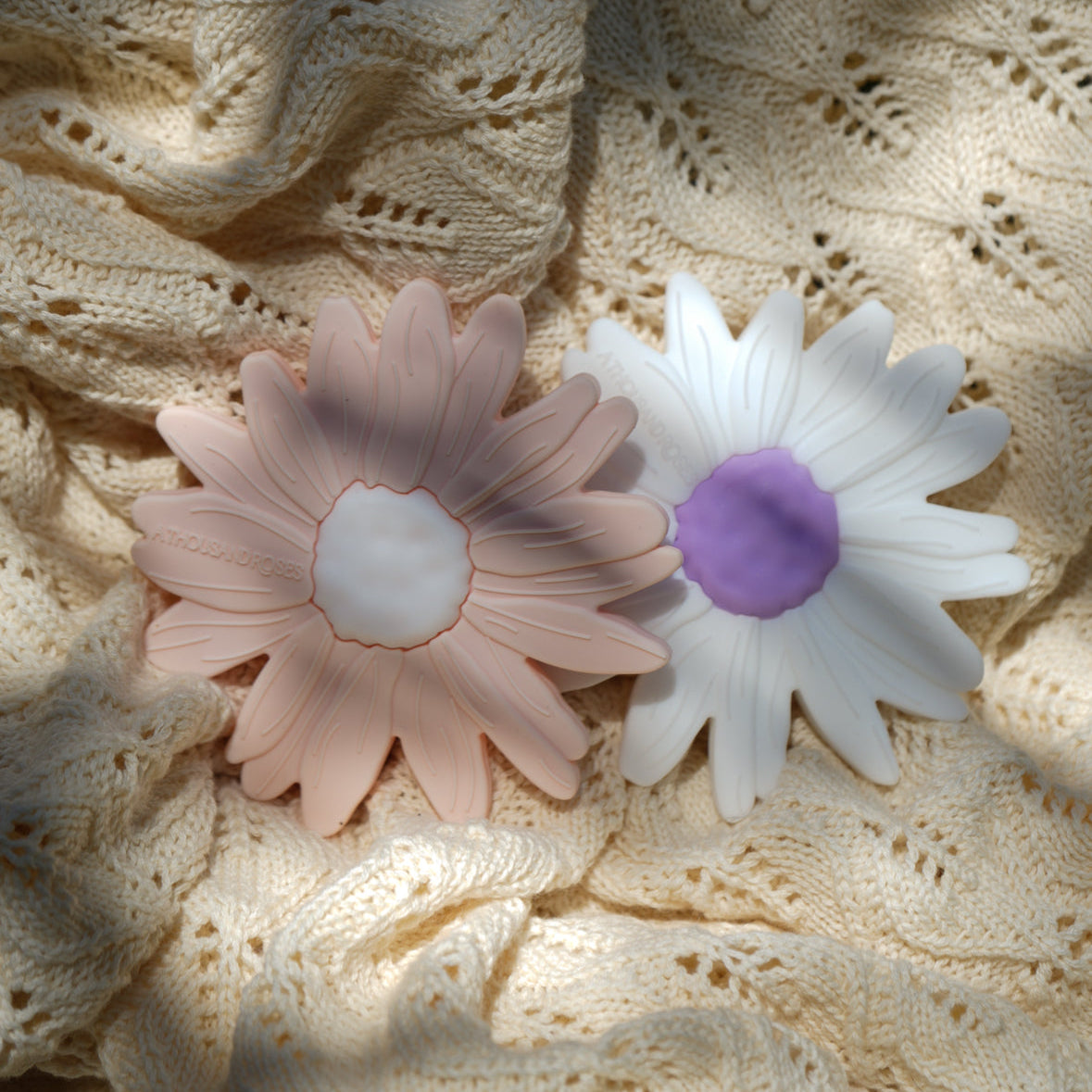
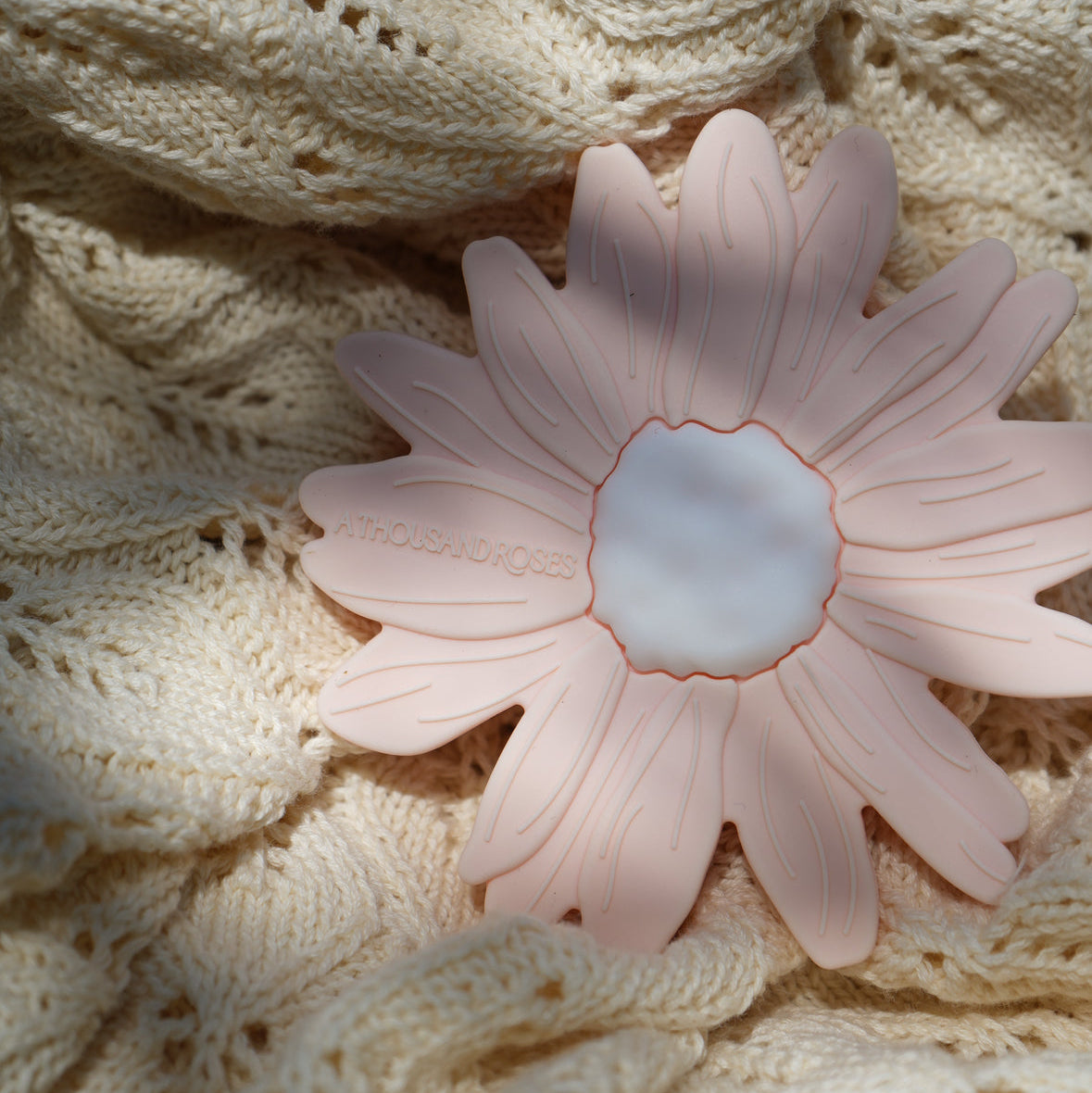
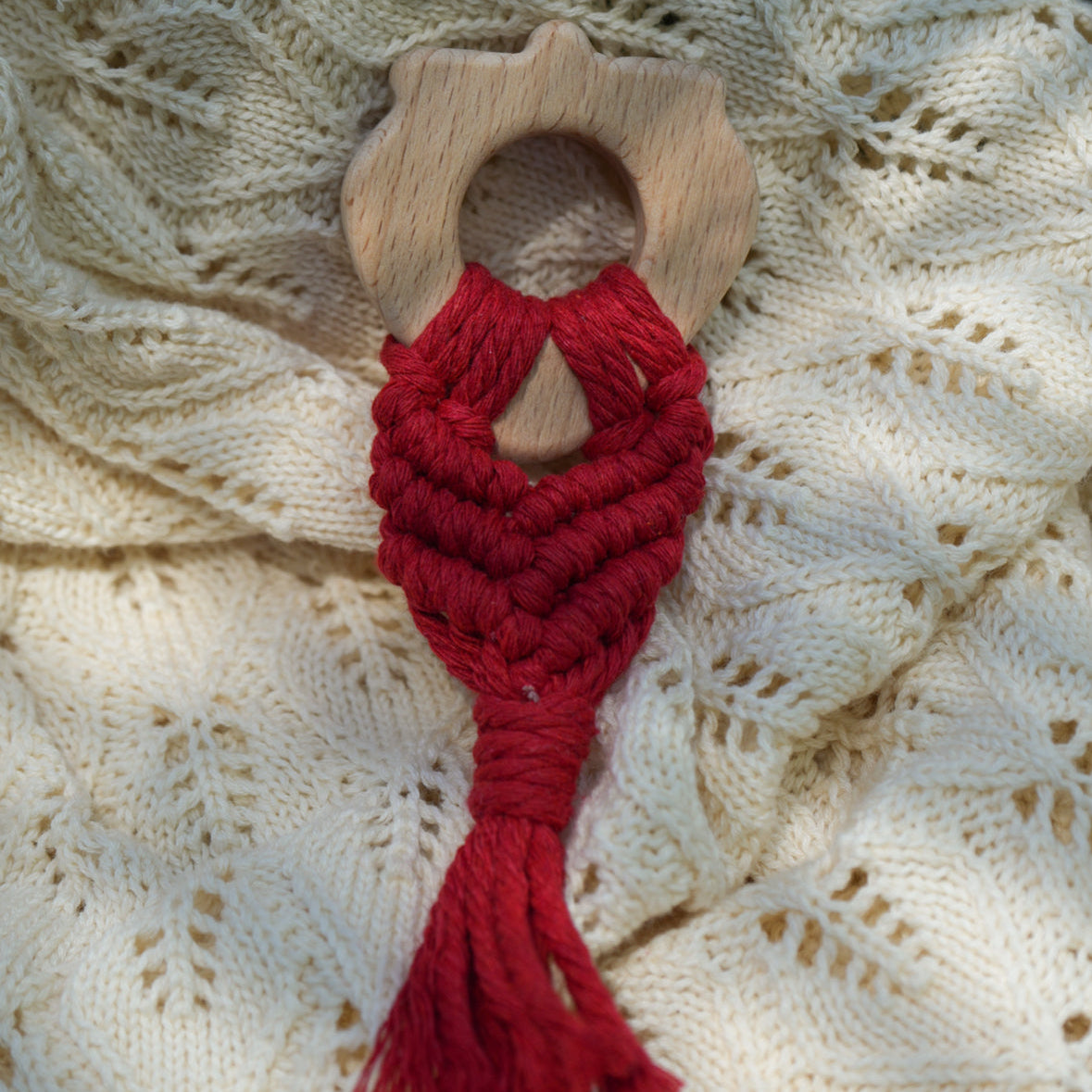
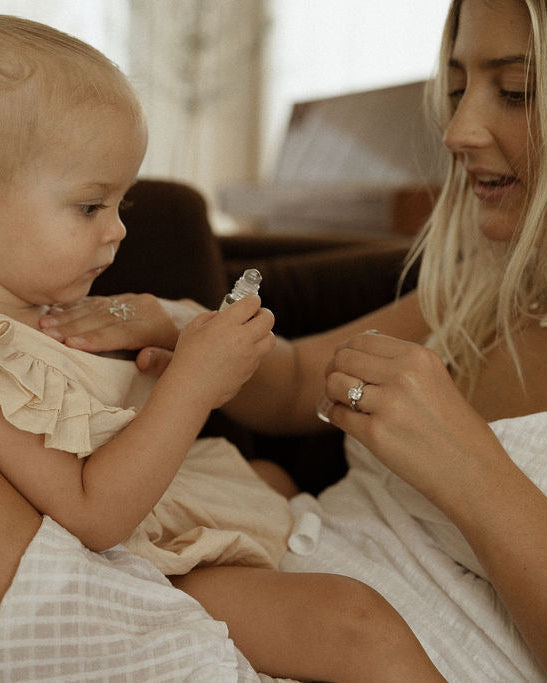
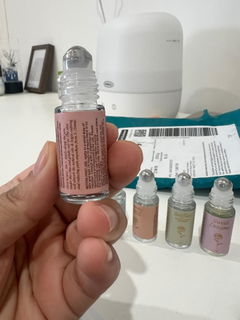
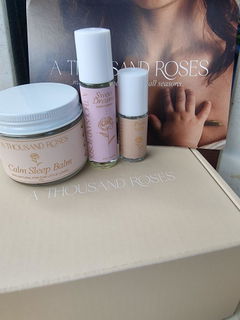
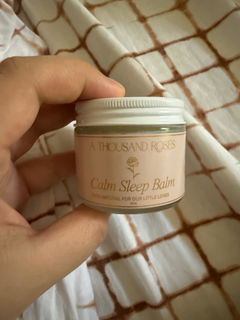
The A Thousand Roses Teething Collection includes the Teething Roller (a therapeutic-grade essential oil blend applied along the jawline), Baltic amber teething necklaces, bracelets and anklets, and BPA-free food teethers. The collection supports babies through the active teething phase from around three months to two years, used by more than 100,000 families globally and reviewed at 4.82 out of 5 across more than 380 reviews on the hero product.
How teething actually works
Teething is the process of tooth eruption through the gums, typically beginning between three and twelve months of age and continuing intermittently until around two and a half years. Each tooth eruption can cause two to four days of localised inflammation, gum sensitivity, increased saliva production, and disrupted sleep. The first molars (around twelve to fifteen months) and second molars (around twenty to thirty months) are usually the most uncomfortable due to their size and surface area.
The discomfort is not constant. Most babies have peaks of discomfort during active eruption interspersed with calmer periods. Understanding this matters when choosing relief products: the Teething Roller is for active peaks, food teethers and amber are for ongoing support. Recognising the difference between a teething peak and a fever or illness also matters, and we recommend reading our complete guide to natural teething relief in the journal for the full picture.
The three natural approaches that work
Three natural approaches have meaningful evidence and community support for teething relief: topical application of therapeutic essential oils along the jawline (the Teething Roller), Baltic amber jewellery worn against the skin under supervision (for ongoing low-level support), and chewing pressure on cold or textured surfaces (food teethers). These three work through different mechanisms and combine well.
The Teething Roller works via beta-caryophyllene in copaiba interacting with CB2 receptors, plus the muscle-relaxing properties of Roman chamomile applied over the masseter muscle group along the outer jaw and sleep support also. Baltic amber works by releasing trace amounts of succinic acid through skin contact, a mechanism that has some research support though it remains contested in mainstream paediatric literature. Chewing pressure works mechanically by countering the upward pressure of erupting teeth with downward bite pressure, supporting the gums and providing distraction.
Safety guidance for each option
The Teething Roller is applied externally to the outer jawline and behind the ears, never to the gums or inside the mouth, and is suitable from three months. Baltic amber jewellery must be worn under direct adult supervision and removed for sleep, unsupervised play and feeding (ACCC guidance). Food teethers should be BPA, BPS, PVC and phthalate free, and inspected regularly for damage. The Teething Roller is the lowest-supervision option however should only be handled by an adult; amber requires the highest.
We are direct about supervision requirements because amber teething necklaces have been associated with choking and strangulation incidents when worn during sleep or unsupervised. The benefit of our jewellery design (individually knotted beads, safety screw clasps designed to fail under sustained pull) is meaningful but does not eliminate the requirement for supervised wear. Many families choose to wear amber as an anklet under a sock, which is a reasonable approach that reduces visible supervision needs while maintaining skin contact.
When to combine and when to escalate
The combination most families settle on is the Teething Roller for active peaks, amber as an anklet under a sock for ongoing low-level support, and a food teether for daytime chewing relief. If symptoms include fever above 38.5°C, refusal of fluids, distress that does not settle with normal comfort measures, or symptoms persisting beyond a week, contact your GP or maternal health nurse. Persistent severe symptoms are usually not teething alone.
Teething is often blamed for symptoms that have other causes, including the run of viral illnesses that coincides with daycare exposure in the same age range. A useful rule from paediatric practice: teething causes localised mouth symptoms (drool, gum redness, mild low-grade temperature) but does not cause high fever, vomiting or diarrhoea. If you see those, do not assume teething. Phone your GP or, in Australia, the after-hours helpline (Healthdirect: 1800 022 222).